
Account-based marketing (ABM) strategies rely heavily on intent data to improve efficiency and connect with buyers at the right time.
As businesses face economic pressures, personalized marketing based on buyers’ intent signals ensures better engagement and higher conversion rates compared to generic campaigns.
What Is Intent Data and Why It Matters
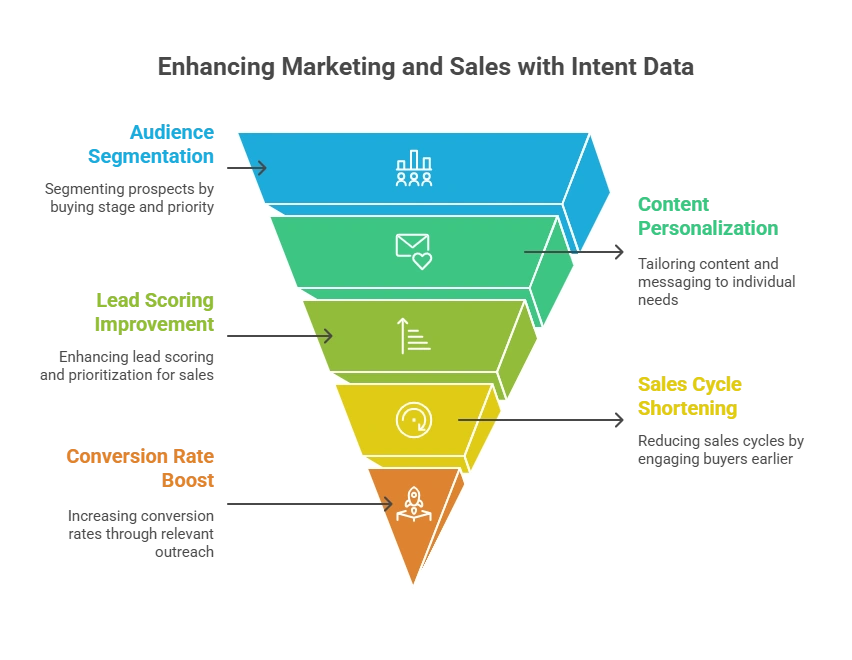
Intent data tracks online behaviors, such as research activities and content consumption, to reveal a prospect’s interest level in a product or service.
Marketers use this data to understand where buyers stand in their journey and what problems they want to solve.
Key Benefits of Intent Data
- Shows which prospects are actively researching solutions
- Helps segment audiences by buying stage and priority
- Enables marketers to personalize content and messaging
- Improves lead scoring and prioritization for sales teams
- Shortens sales cycles by reaching buyers earlier
- Reduces wasted marketing spend on uninterested leads
- Enables targeted ads with higher click rates
- Supports content creation aligned with buyer questions
- Boosts conversion rates by delivering relevant outreach
Also read about: Best Marketing Attribution Software For 2025
How Marketers Use Intent Data in ABM
Using intent data, companies design tailored campaigns that speak directly to the needs of their target accounts.
This data informs content creation, ad targeting, email sequences, and sales outreach, ensuring messages resonate with prospects’ current pain points and buying motives.
Practical Applications
- Creating personalized emails based on recent buyer research
- Building landing pages focused on specific intent-driven topics
- Adjusting media spend toward high-intent audience segments
- Aligning sales efforts to prioritize engaged accounts
- Measuring campaign effectiveness by tracking intent shift
With more than 60% of marketers reporting improved ABM results using intent data, it’s clear this approach drives smarter, more impactful marketing.
Summary
Intent data transforms marketing by providing clear, actionable insights about buyer interest.
Tailoring content, media, and messaging based on these signals helps businesses stay competitive, reduce costs, and boost revenue in today’s complex B2B landscape.
More News To Read:
