
Digital Asset Management, or DAM, is no longer just a storage system.
It is becoming a critical tool for modern marketing and digital teams. Once seen as a static archive, DAM now plays an active role in daily business operations.
New research shows that companies now use DAM to improve speed, teamwork, and market performance.
As customer demands rise and digital channels grow, DAM has shifted from a support tool to a business essential.
A recent study by Orange Logic and Forrester Consulting highlights this change. The survey included 313 global leaders responsible for content and media operations.
The results show a clear trend. DAM is now central to how organizations work, create, and deliver content.
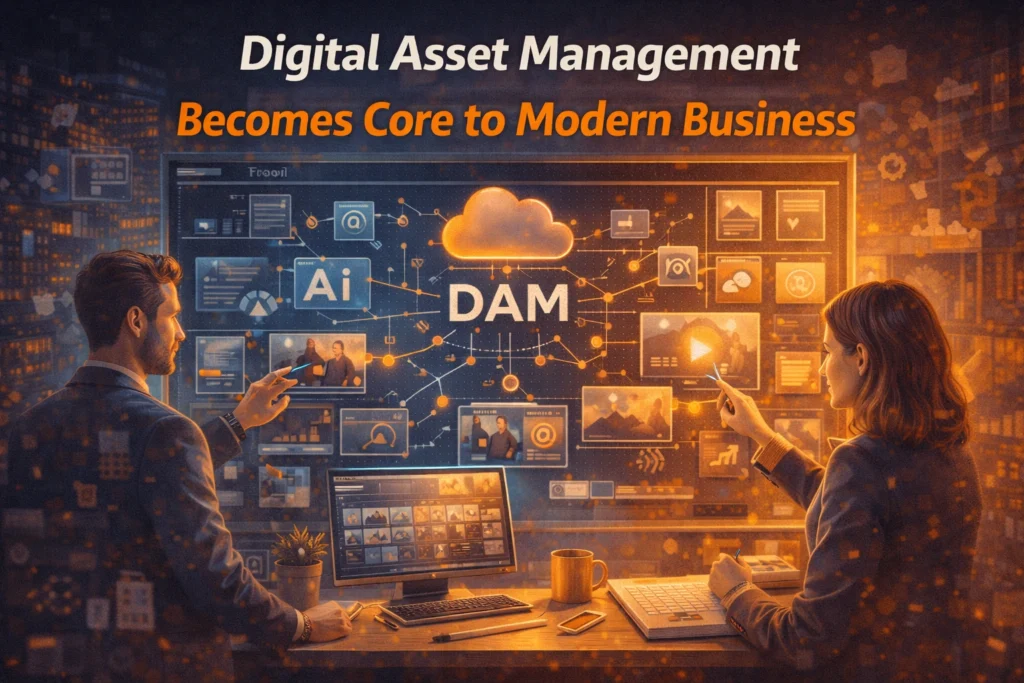
Digital Asset Management: DAM Evolves From Storage to Smart System
Today’s DAM platforms do much more than store files. They help teams find, manage, and use content faster.
Key DAM Capabilities Today
- AI-powered search for faster discovery
- Automated tagging and metadata
- Smart content recommendations
- Built-in workflow management
- Easy sharing across teams
- Integration with marketing tools
Leaders now expect DAM to connect with other digital systems. This includes content management, marketing automation, and creative tools. DAM now supports collaboration across marketing, sales, creative, and production teams.
AI plays a major role in this shift. Intelligent DAM systems reduce manual work. They help teams focus on strategy instead of file management.
Also read about: Marketing Trends 2025: What’s Shaping the Future of Digital Marketing
Efficiency and Growth Drive DAM Investment
Operational efficiency is the biggest reason companies invest in DAM. Leaders want systems that save time and reduce errors.
Business Goals Linked to DAM
- Faster go-to-market execution
- Better customer experience
- Higher employee productivity
- Stronger brand consistency
- Improved revenue performance
Organizations are also embedding DAM into their go-to-market strategies. Instead of working in silos, teams now rely on DAM as a shared platform.
Automation is another key focus. Companies use DAM to automate routine tasks like approvals, version control, and asset distribution. This frees teams to work on high-value creative and strategic work.
The study shows one clear message. DAM is no longer optional. It is becoming a foundation for digital success.
As markets move faster and content demands grow, intelligent and integrated DAM systems will define how competitive organizations operate.
More News To Read: