
Google I/O happened during the same week as the May 2026 Core Update, which made for an unusually dense news cycle for anyone working in SEO. But one of the most practically important things confirmed at I/O is something every site using structured data needs to understand: AI Mode is now a confirmed and expanding feature of Google Search, and it interacts with schema markup differently from traditional search results.
AI Mode Is Reading Your Structured Data Differently
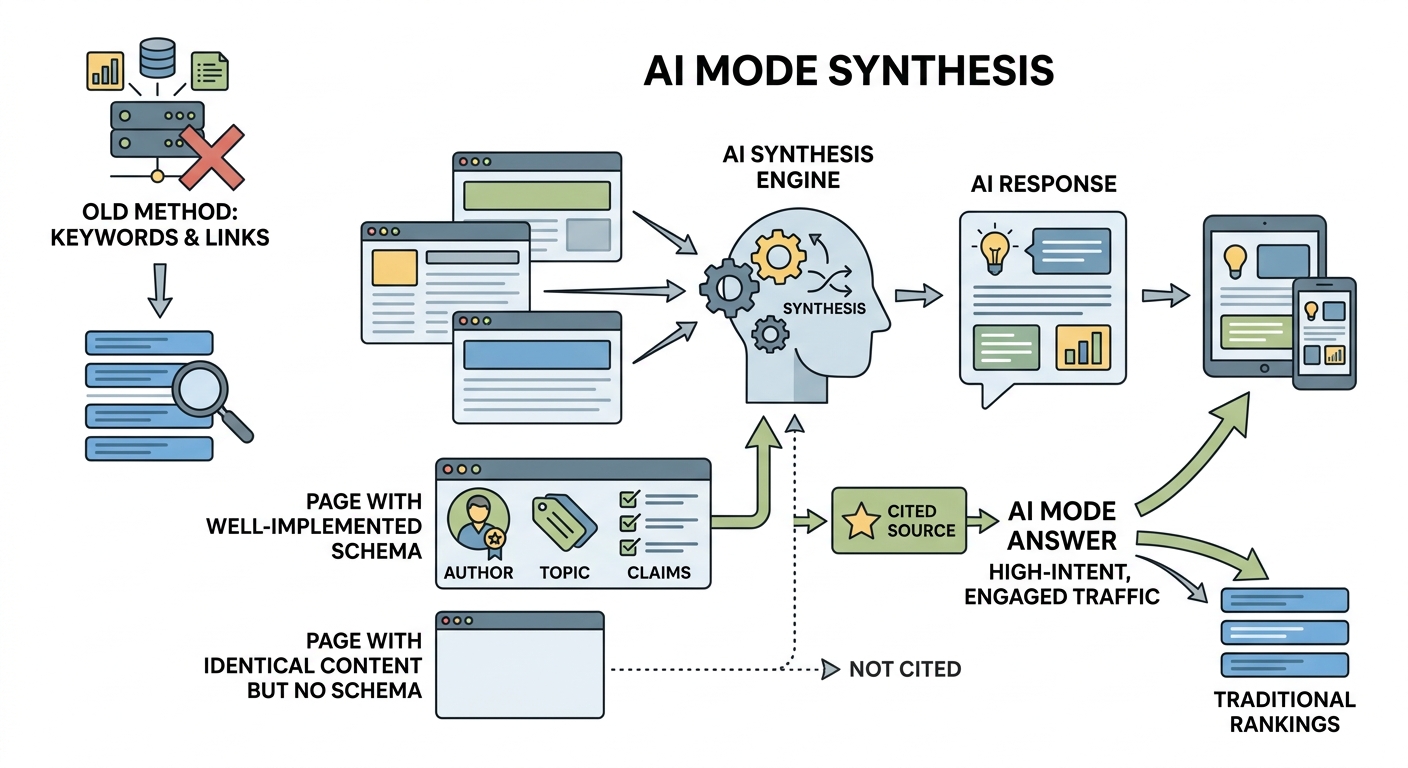
AI Mode does not just match keywords to pages and return a list of links. It builds answers by pulling information from multiple sources and synthesising them into a single response. Schema markup that clearly defines what a page is about, who wrote it, and what claims it makes becomes a structured input into that synthesis process.
Sites with well-implemented schema are more likely to be cited as sources in AI Mode answers than sites with identical content but no structured data. This is a meaningful shift because being cited in an AI Mode answer drives a different kind of traffic than traditional organic rankings — typically higher intent and more engaged.
The Schema Types That Matter Most Right Now
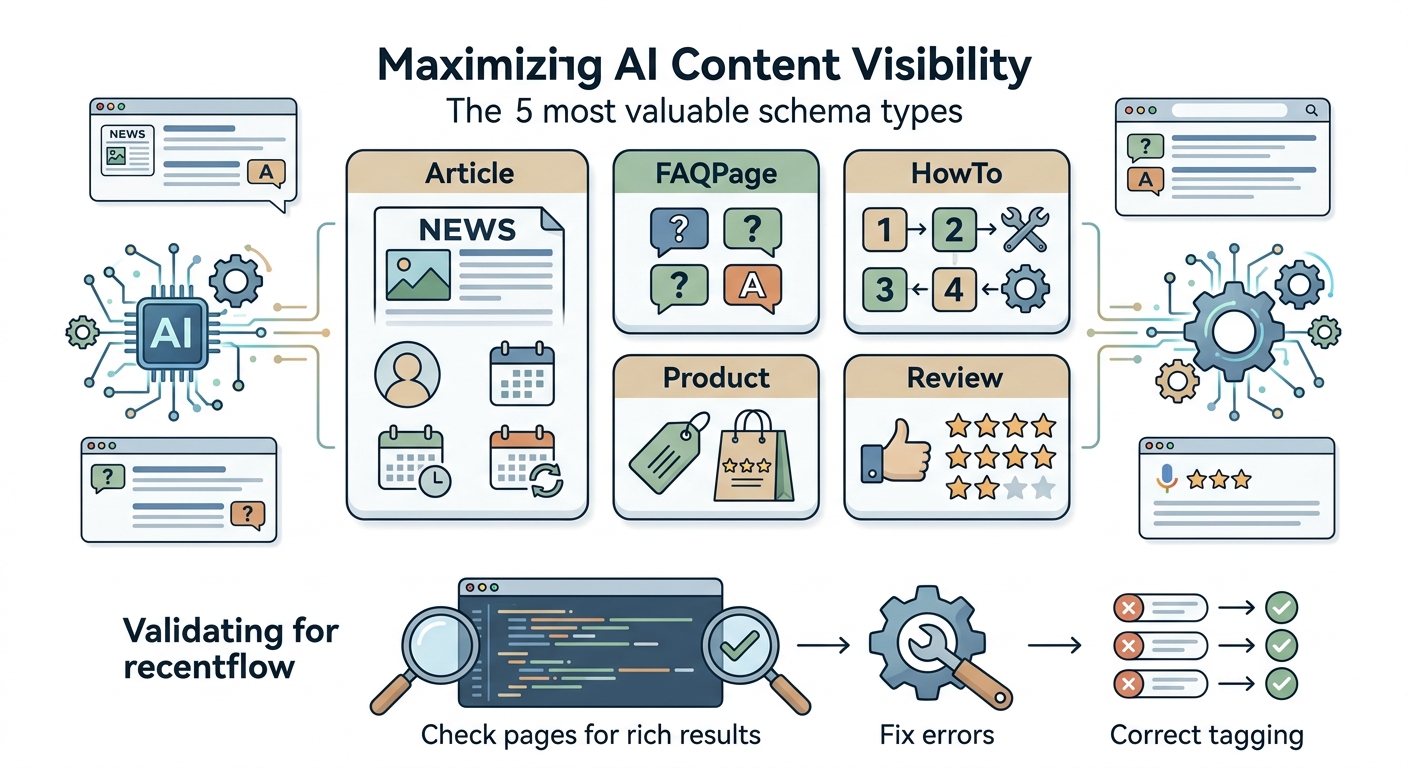
The most valuable schema types for AI Mode visibility are Article with complete author, date published, and date modified fields, FAQPage, HowTo, Product, and Review. These tell Google’s systems not just what words appear on the page but what type of content it is and what it is intended to help the reader do.
If you have not audited your schema implementation recently, this week is the right time. Run your key pages through the Rich Results Test, fix any validation errors, and make sure your most important content types are tagged correctly and completely.
The search landscape is shifting faster than at any point in the last decade. Schema is no longer optional infrastructure. It is how you stay legible to a search system that is increasingly operating through AI interpretation rather than keyword matching.
Quick Links:
