
The Connection Between Publisher Profiles and Entity Schema
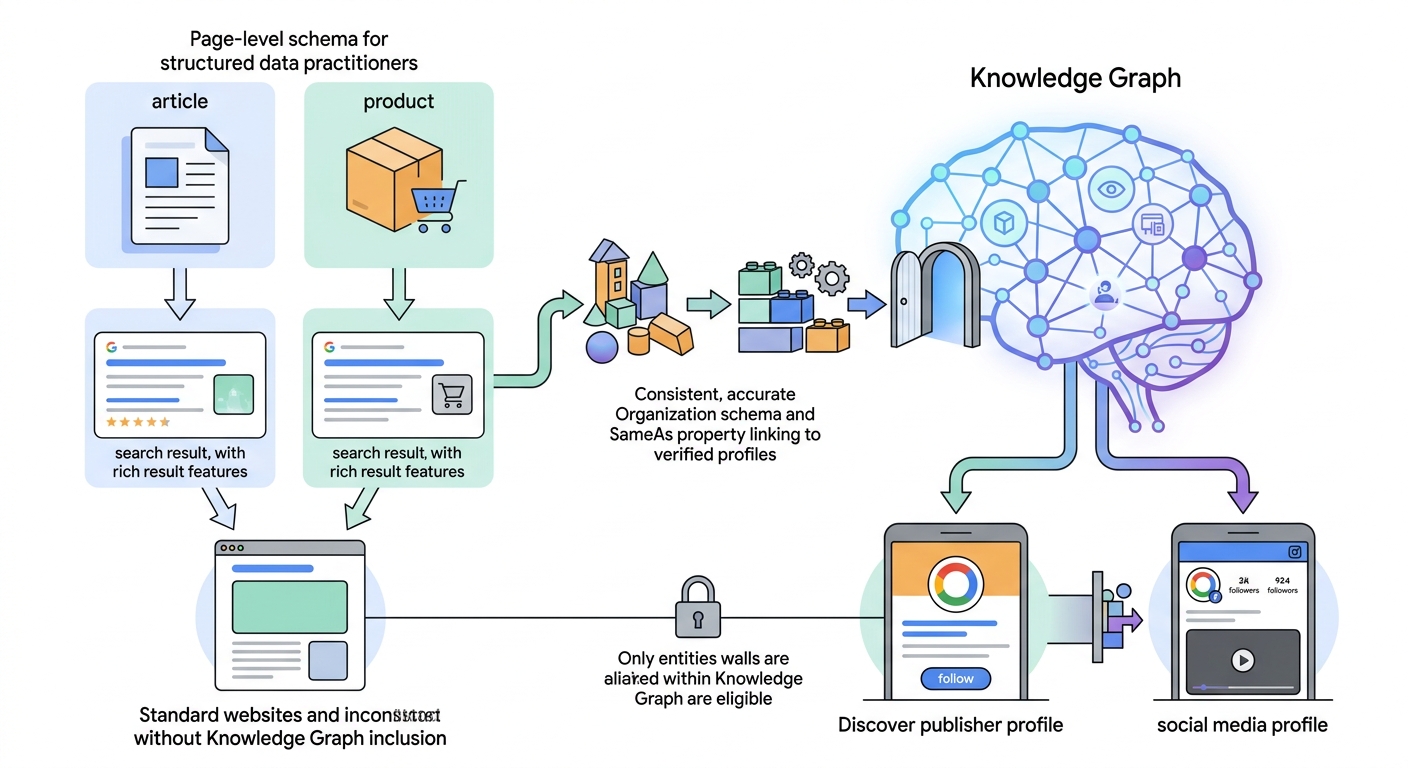
Most structured data practitioners are focused on page-level schema — the Article, Product, FAQ, and HowTo markup that influences how individual pages appear in search results. A development in Google Discover this month points to a different layer of schema that deserves more attention: organisation and entity-level schema that influences whether your brand gets a Knowledge Graph entry and, now, a publisher profile in Discover.
Publishers who have a Knowledge Graph and regularly publish content are generally eligible for a Discover publisher profile page. There are two types of publishers that receive publisher profiles: those who publish on websites and social media, and those who publish only on social media. SaaS Ultra
The Knowledge Graph requirement is the critical line. A publisher profile in Discover is not available to every site that publishes content — it is specifically gated behind Knowledge Graph inclusion.
And Knowledge Graph inclusion is strongly correlated with consistent, accurate Organization schema, SameAs property linking to verified external profiles, and a clear entity identity that search systems can disambiguate.
What Organisation Schema Actually Does
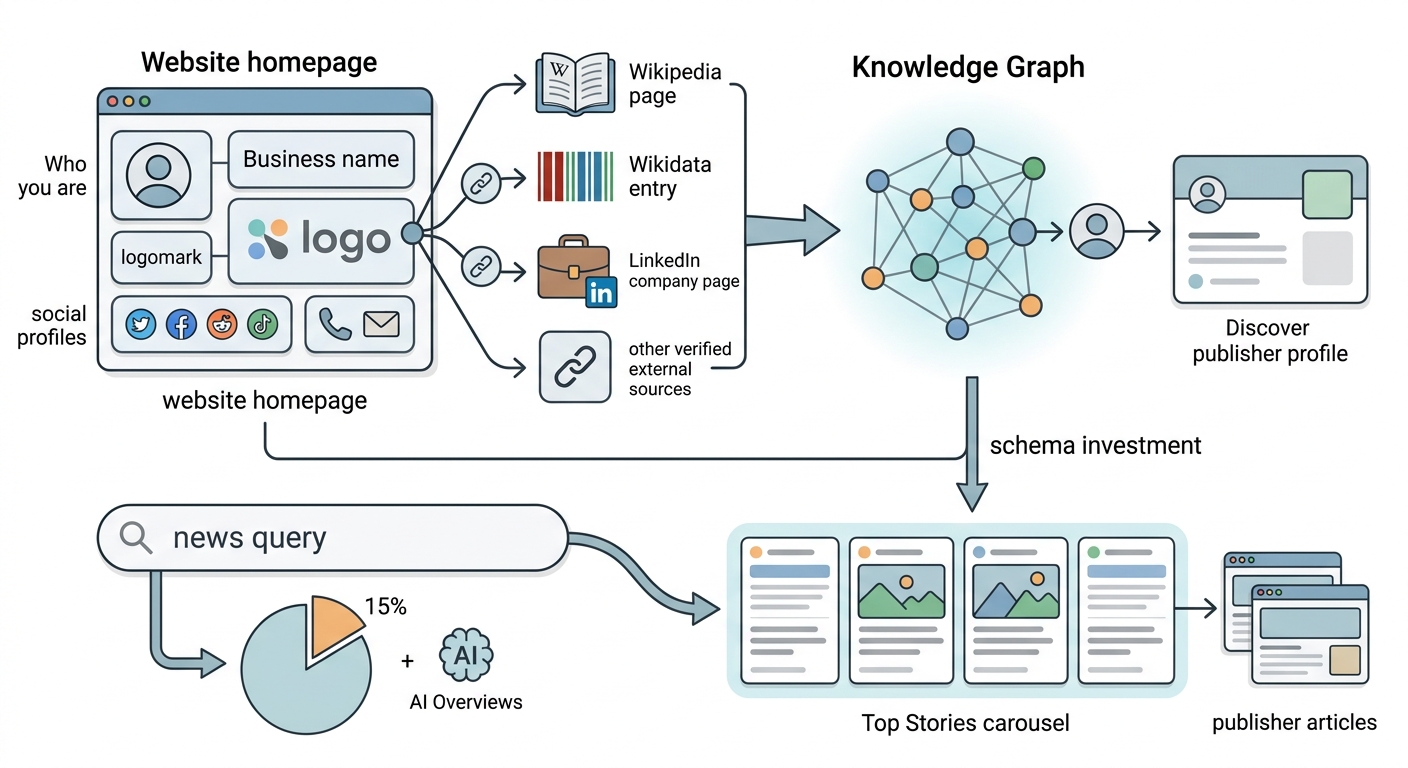
Organisation schema on your site’s homepage and about page tells Google’s systems precisely who you are — your name, your logo, your social profiles, your contact information, and crucially your Sameou property links connecting your site entity to your Wikipedia page, Wikidata entry, LinkedIn company page, and other verified external sources.
These connections are how Google builds and maintains its Knowledge Graph, and Knowledge Graph inclusion is increasingly the gateway to features — including Discover publisher profiles — that sites without it cannot access.
AI Overviews appear less often for news queries than for other topics, appearing for about 15% of news queries. News queries often trigger the Top Stories carousel, which links directly to publisher articles. Sites with strong Knowledge Graph entity clarity are more reliably included in Top Stories for relevant breaking queries.
The schema investment that supports Knowledge Graph inclusion also supports Top Stories inclusion — two separate discovery surfaces with the same underlying technical foundation.
The Practical Schema Priority Order for 2026
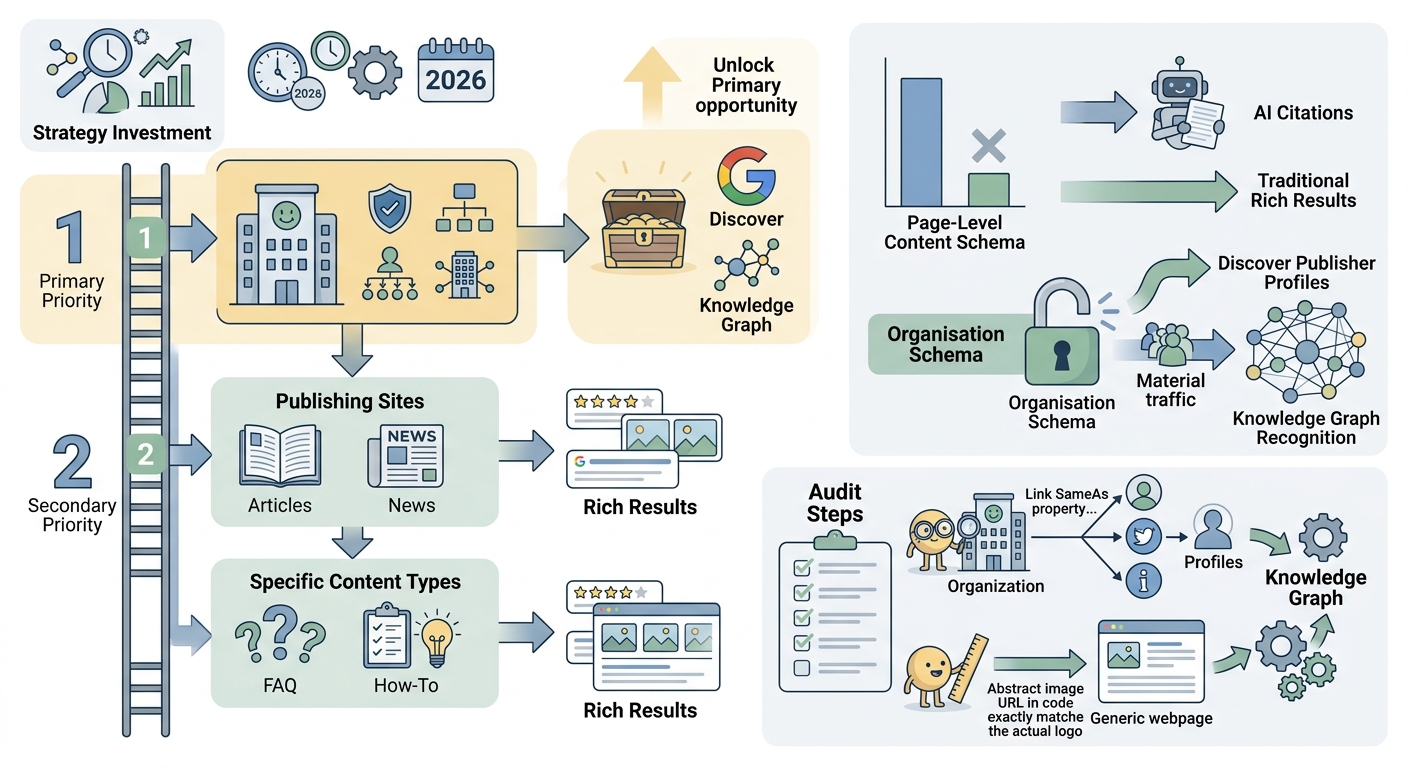
Given the Ahrefs finding that page-level schema does not directly boost AI citation rates, and the Discover publisher profile finding that organisation-level schema gates entire feature sets, the rational priority order for schema investment in 2026 is: Organisation schema first, Article and NewsArticle schema second for publishing sites, then FAQ and HowTo for specific content types. Page-level content schema remains valuable for traditional rich results — it just is not the citation driver many assumed it was.
Audit your Organisation schema this week. Check whether it includes accurate Sameou property links to your LinkedIn, Twitter/X, Wikipedia page if applicable, and Crunchbase or other relevant profiles. Check whether your logo URL in the schema matches the actual logo on your site.
These details compound over time into Knowledge Graph recognition — and Knowledge Graph recognition is now gating features like Discover publisher profiles that are becoming material traffic sources.
💬 Reddit — r/SEO and r/TechSEO organisation schema and Knowledge Graph discussions: 🔗https://www.reddit.com/r/SEO/search/?q=organization+schema+knowledge+graph+2026
🐦 X/Twitter — SEO practitioners on entity schema and Discover publisher profiles: 🔗 https://x.com/search?q=entity+schema+Google+Discover+publisher+profile&f=live
💬 Quora — how does organization schema help with Google Knowledge Graph: 🔗 https://www.quora.com/search?q=organization+schema+Google+Knowledge+Graph+benefit
Quick Links:
