
The Finding That Challenges Everything
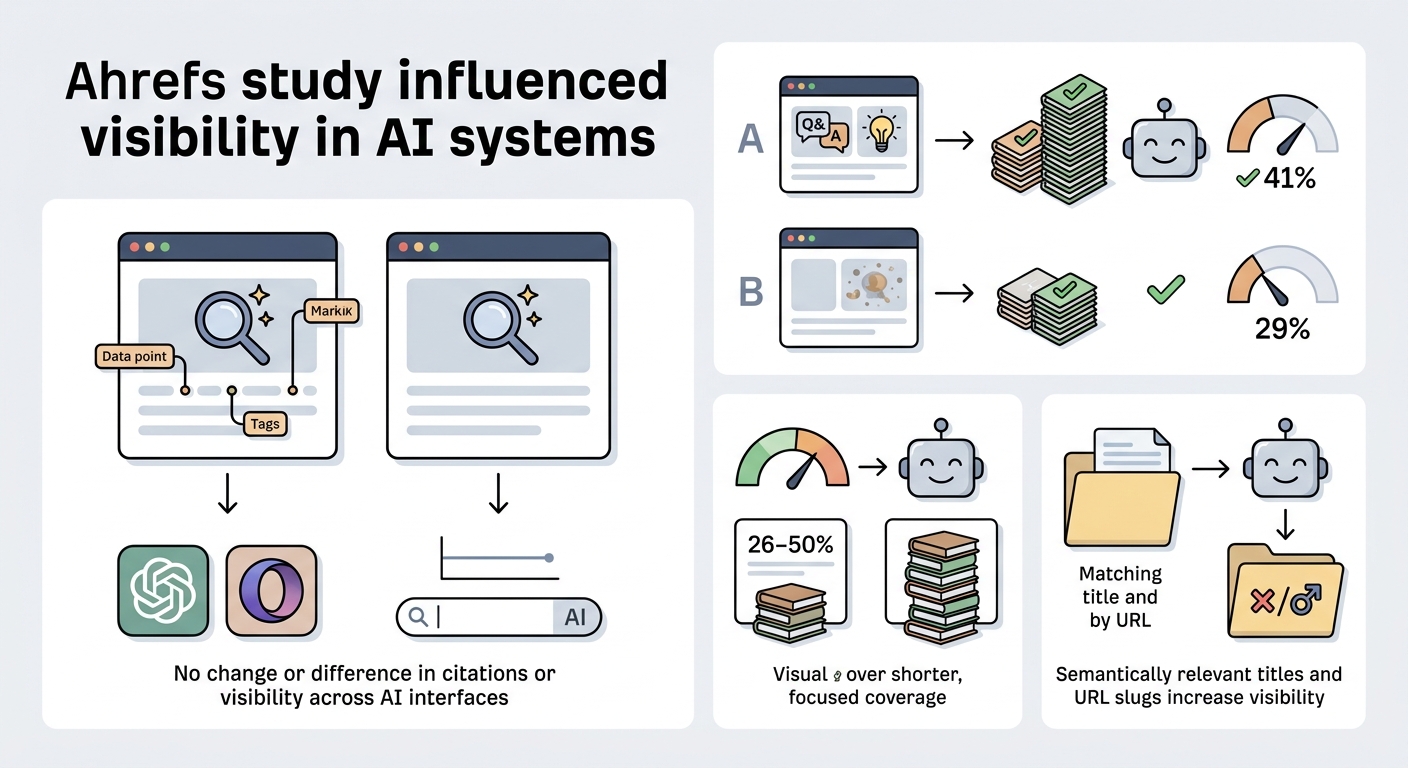
A new study published by Ahrefs in May 2026 has dropped a genuinely provocative finding into the structured data conversation: schema markup has no measurable impact on AI visibility. Adding schema produced no major uplift in citations across AI Overviews, AI Mode, and ChatGPT in Ahrefs’ controlled testing.
Schema markup has no impact on AI visibility. Adding schema produced no major uplift in citations on AI Overviews, AI Mode, and ChatGPT, according to Ahrefs’ May 2026 study. Separately, pages with headlines that directly answer the question get cited by ChatGPT 41% of the time, while pages with loosely related headlines drop to 29%.
ChatGPT prefers focused shorter content over comprehensive guides — pages covering 26–50% of ChatGPT’s fanout sub-queries get cited more than pages covering 100%. Pages with a semantically relevant title and URL slug are more likely to get cited by ChatGPT.
Why This Does Not Mean Stop Using Schema
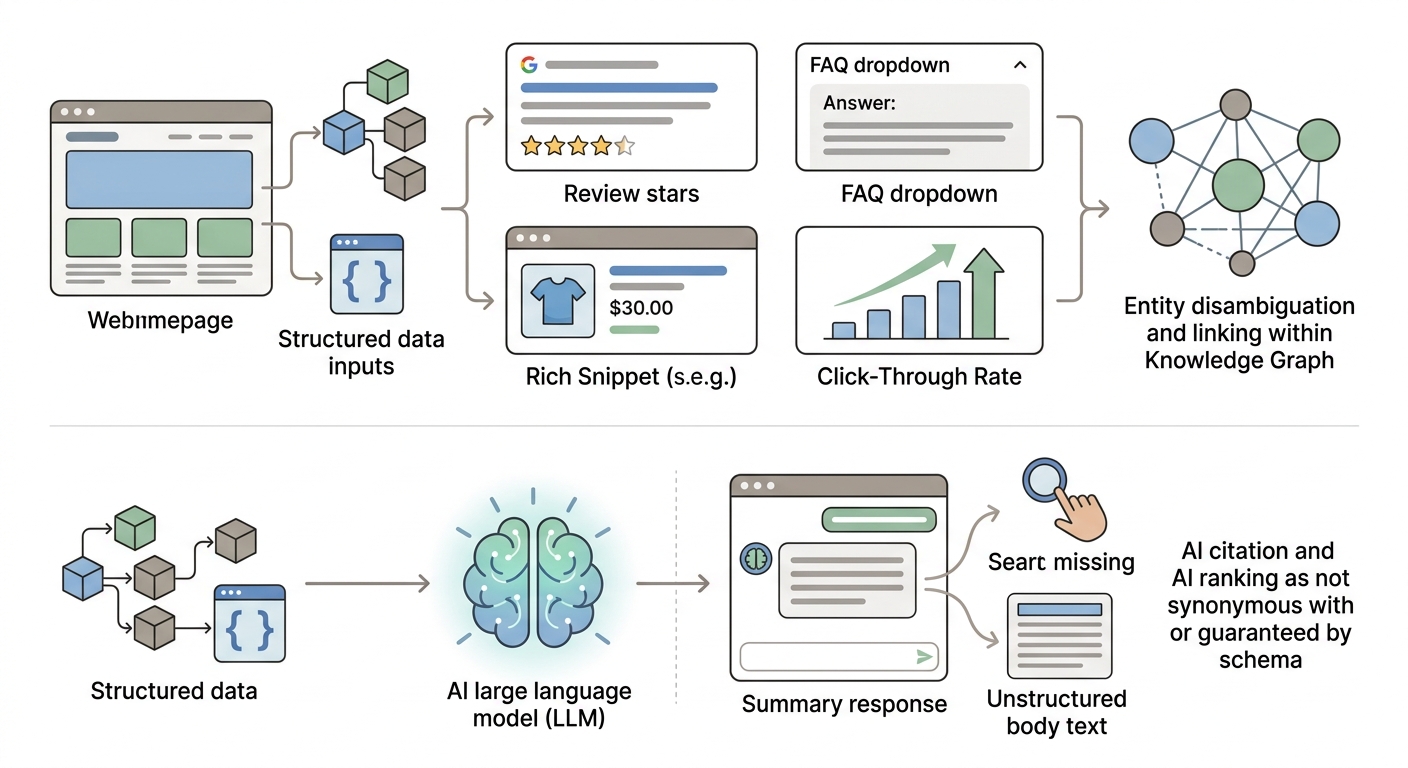
Before pulling all your JSON-LD, the important context is what the Ahrefs study was measuring — citation frequency in AI responses — versus what schema demonstrably does affect: traditional rich results, click-through rates from standard SERPs, and entity disambiguation in Google’s knowledge systems. These are different outputs.
Schema markup’s proven value for traditional search — 35% higher click-through rates via rich snippets, FAQ dropdowns, review stars in standard results — is not contradicted by this finding. What the study says is specifically that adding schema does not measurably increase how often AI systems cite your content. The implication is that AI citation is driven by different signals than traditional ranking.
What Does Drive AI Citation

The Ahrefs data points clearly to what actually moves the needle for AI citation. Direct, answer-first headlines. Focused content that covers a specific angle thoroughly rather than attempting to be comprehensive about everything. Semantically coherent title-to-URL alignment. Shorter, more targeted pages over exhaustive long-form guides.
This is a meaningful insight for content strategy. The instinct to make every article longer and more comprehensive — driven by years of SEO advice around content depth — may actually be working against AI citation in some contexts. An article that answers one question extremely well is more likely to get cited than an article that answers twenty questions adequately.
The Unified Takeaway
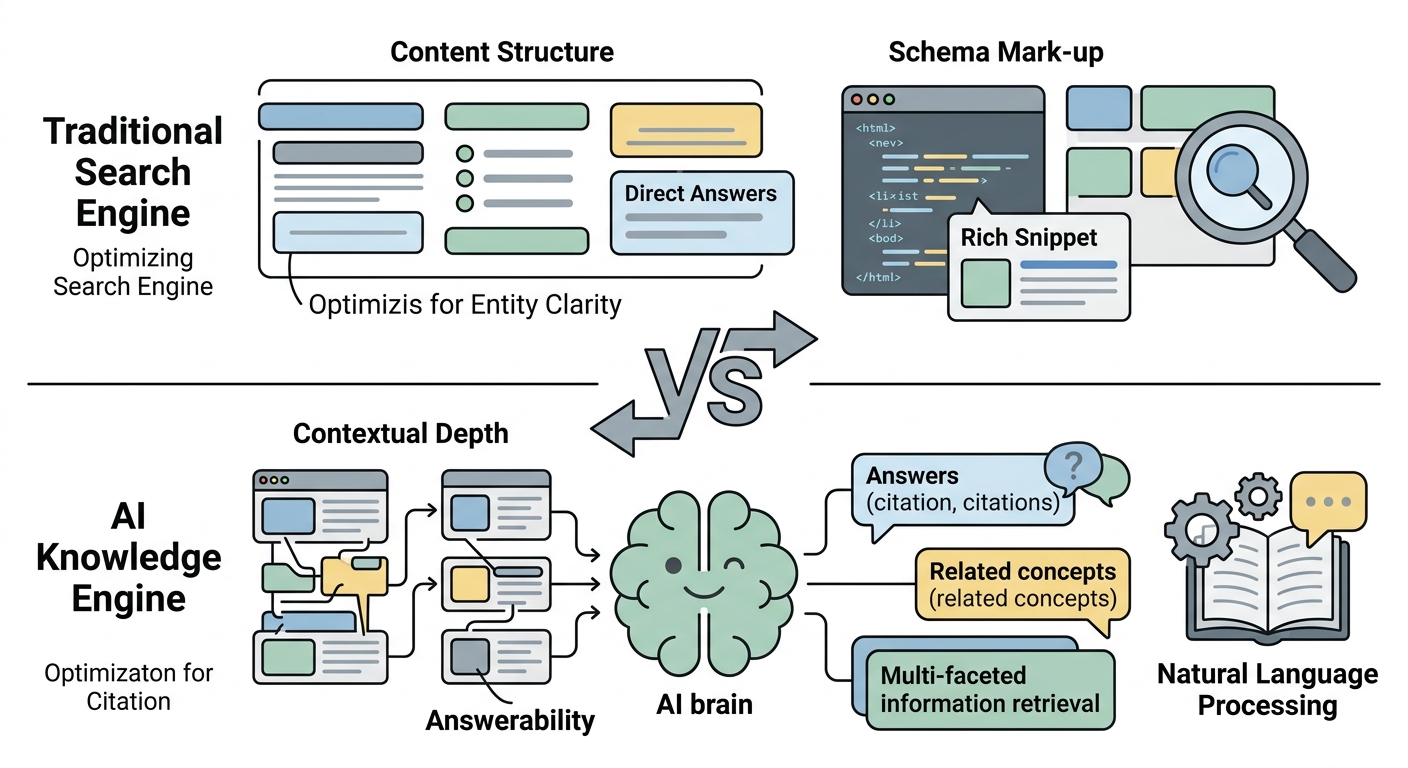
Use schema for traditional search and entity clarity. Optimize content structure — direct answers, focused scope, clear headlines — for AI citation. These are not the same optimization goal, and conflating them leads to bad strategic decisions. The sites that understand this distinction are going to outperform those that treat “SEO” as a single unified discipline in the AI search era.
💬 Reddit — r/SEO heated debate on the Ahrefs schema study findings: 🔗 https://www.reddit.com/r/SEO/search/?q=schema+markup+AI+citation+Ahrefs+study
🐦 X/Twitter — SEO practitioners arguing about the schema-AI finding: 🔗https://x.com/search?q=Ahrefs+schema+AI+citation+study+2026&f=live
💬 Quora — does schema markup help with Google AI Overviews: 🔗 https://www.quora.com/search?q=does+schema+markup+help+Google+AI+Overviews+citation
Quick Links:
