
A New Protocol That Very Few Sites Have Implemented
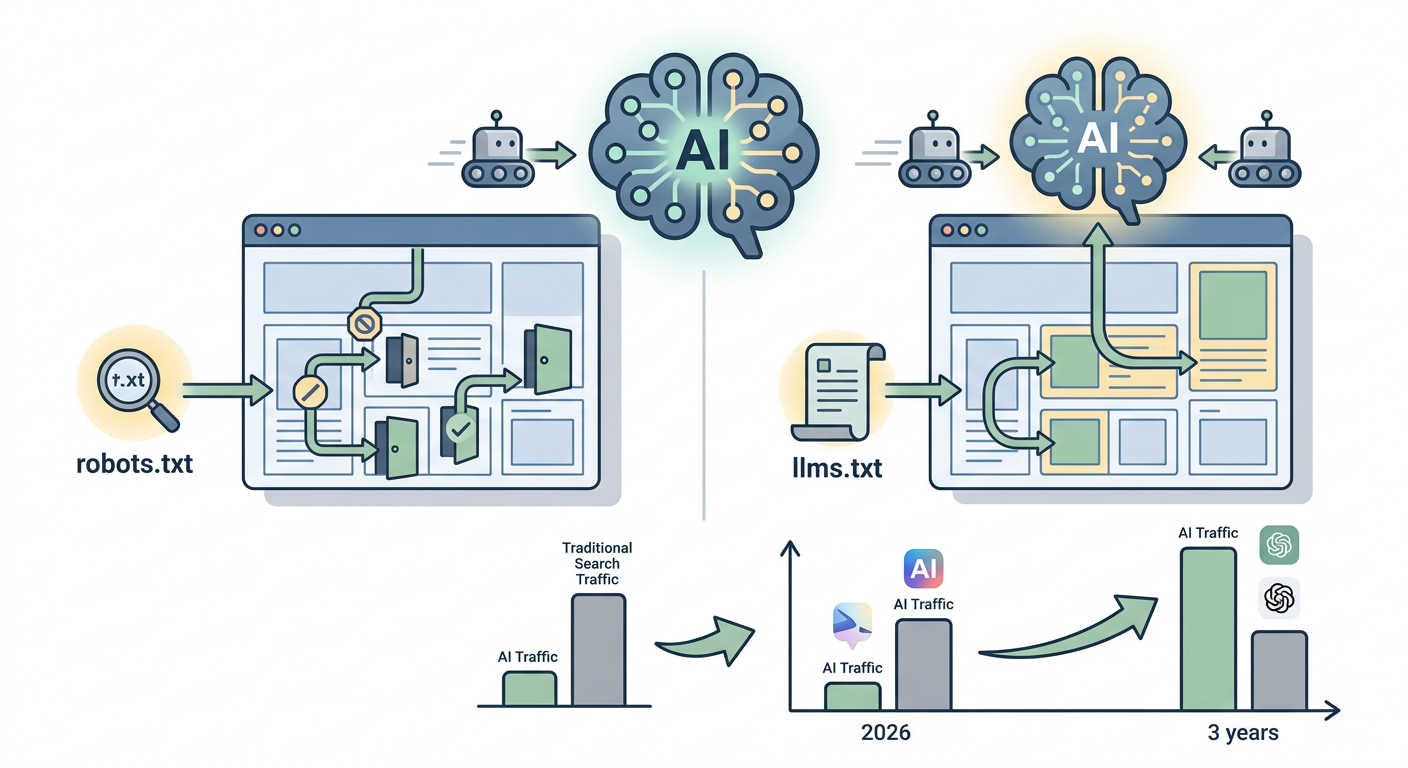
While most of the structured data conversation in 2026 is focused on schema markup and its relationship to AI search, a separate and simpler protocol has been quietly gaining adoption among the sites that consistently show up in AI citations — the llms.txt file. This is not a complex technical implementation. It is a plain text file that tells AI crawlers specifically what your site is about, which pages are most important, and how the content should be understood. And almost nobody has implemented it yet.
The protocol works similarly to robots.txt — it sits at the root of your domain and provides AI systems with a structured, easily parseable summary of your site’s content hierarchy and key pages. Where robots.txt tells crawlers what they are allowed to access, llms.txt tells AI systems what is most worth reading and how to interpret it.
Some sites are now reporting over 1% of total sessions coming from platforms like ChatGPT, Perplexity, and Copilot. While that share remains small overall, the growth highlights how AI platforms are beginning to play a measurable role in website discovery. AI platforms are expected to drive more website visits than traditional search engines in the next three years.
Why Implementation Now Matters
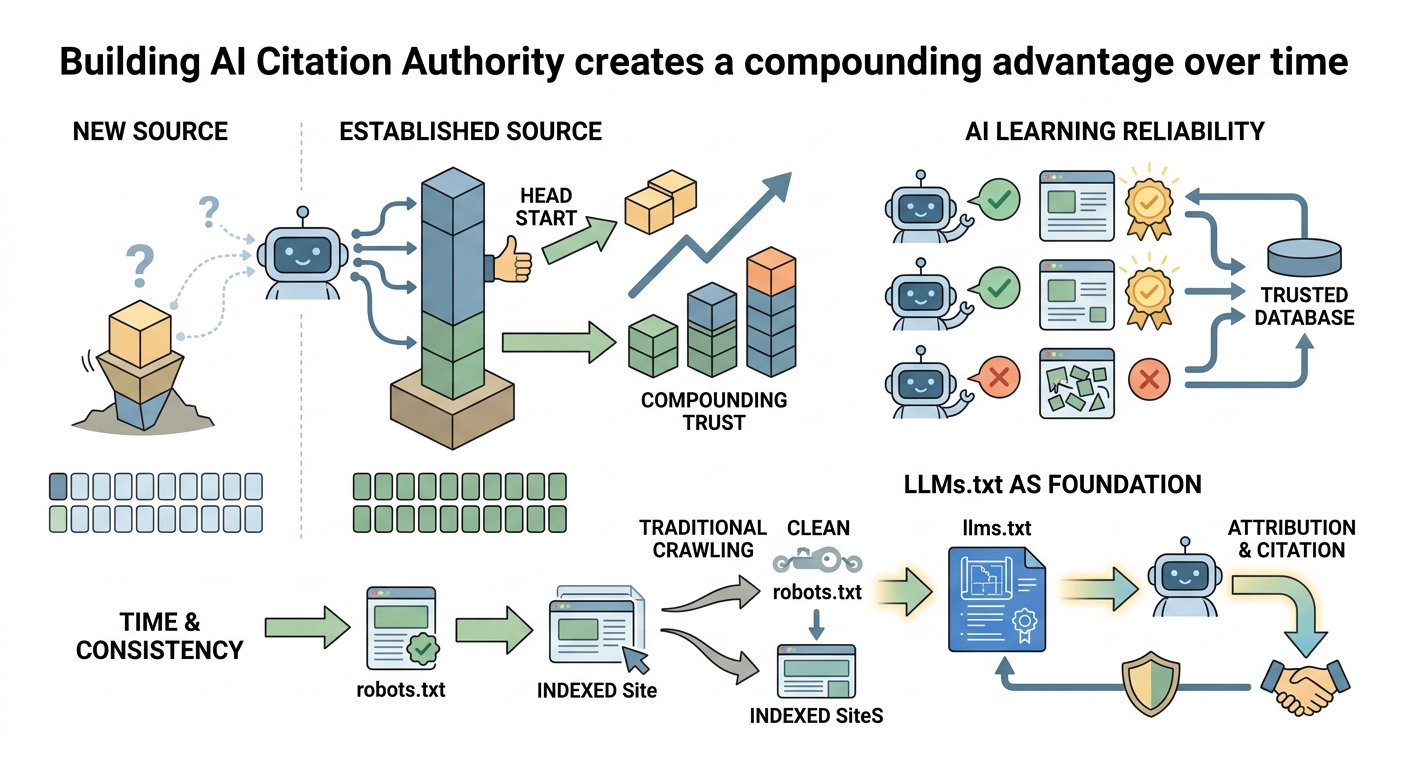
The sites building AI citation authority now are establishing a head start that compounds over time. AI systems learn which sources to trust through repeated, consistent, high-quality citations. A site that has been reliably cited in AI responses for twelve months has a trust signal that a new entrant to the space cannot quickly replicate. Implementing llms.txt is one of the technical foundation steps that makes your content more reliably processed and attributed by AI systems — similar to how clean robots.txt implementation made traditional crawling more reliable in the early search era.
The Practical Implementation
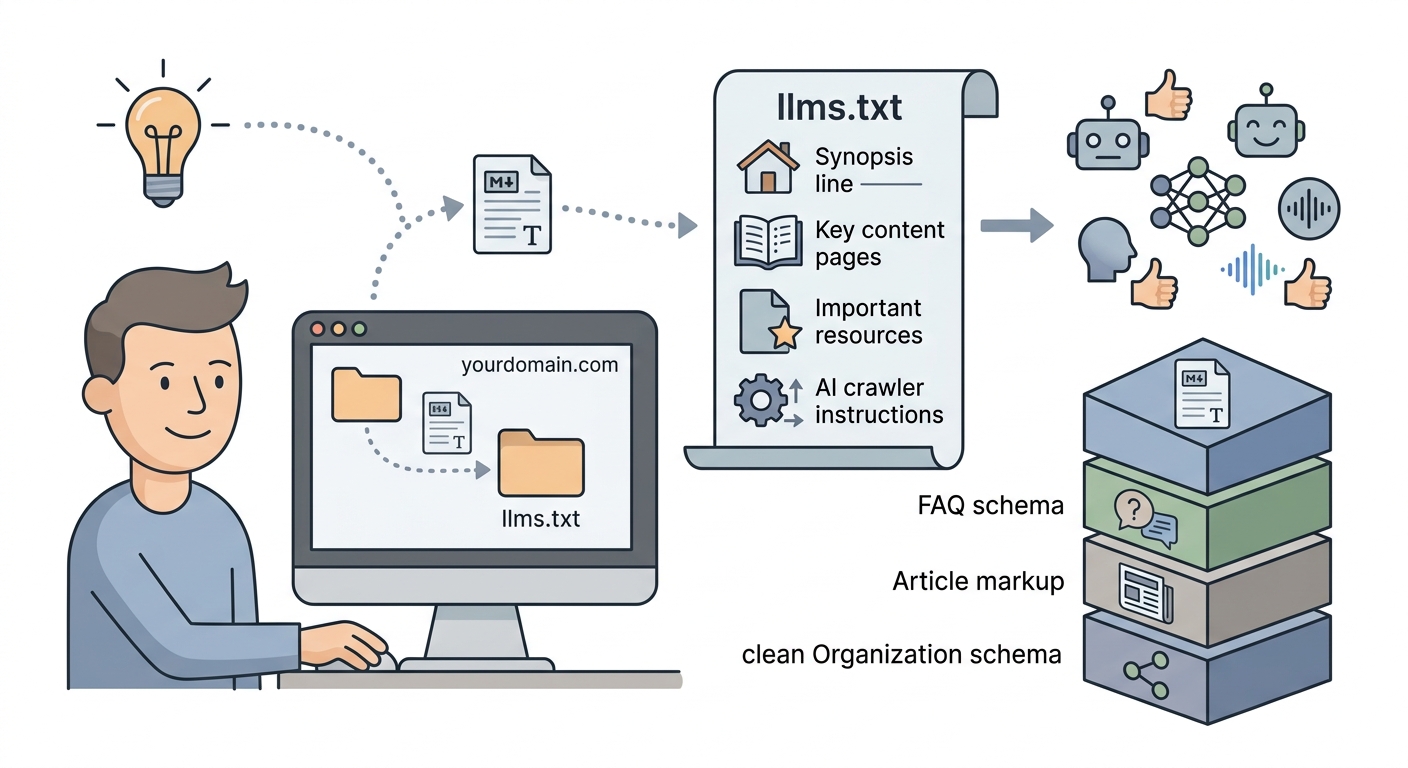
Creating a basic llms.txt file takes under an hour for most sites. The file goes at yourdomain.com/llms.txt, written in plain markdown, and typically includes: a brief description of the site and its purpose, a list of key content pages with brief descriptions, your most important resource pages, and any specific instructions for how AI systems should treat your content. The specification is open and evolving, but even a basic implementation signals to AI crawlers that your site is thoughtfully structured and AI-aware.
Combined with clean Organisation schema, Article markup on your key posts, and FAQ schema on your most-cited pages, llms.txt completes a technical infrastructure stack that positions your site well for AI citation across every major platform.
💬 Reddit — r/SEO and r/TechSEO threads on llms.txt implementation: 🔗https://www.reddit.com/r/TechSEO/search/?q=llms.txt+AI+SEO+implementation+2026
🐦 X/Twitter — developers and SEOs sharing llms.txt implementation guides: 🔗https://x.com/search?q=llms.txt+AI+search+citation+SEO+2026&f=live
💬 Quora — what is llms.txt and does it help with AI search visibility: 🔗 https://www.quora.com/search?q=llms.txt+file+AI+search+SEO+benefit
Quick Links:
