FunnelFlux Pro Review 2026: Is This Visual Tracker Worth Your Money?
Last Updated on: August 25, 2026 by Sonia Allan | Fact Checked
Affiliate disclosure: In full transparency – some of the links on our website are affiliate links, if you use them to make a purchase we will earn a commission at no additional cost for you (none whatsoever!).
The number of marketers spreading paid ad spend across multiple platforms at once keeps climbing, and that trend has made dependable conversion tracking software a fundamental requirement rather than an optional extra.
FunnelFlux Pro approaches this space through a visual, node driven tracking method that operates quite differently from the standard tabular trackers most people are used to. This review takes a close look at what FunnelFlux Pro actually offers, what it costs, and whether it is a smart addition to your marketing setup.
One thing to clarify upfront, FunnelFlux exists in two separate formats, a self hosted version managed on your own server, and FunnelFlux Pro, the cloud hosted product covered throughout this review.
What Is FunnelFlux Pro
FunnelFlux Pro is a cloud hosted tracking platform designed for people running paid campaigns across Facebook, Google, TikTok, native ad networks, push, and pop traffic.
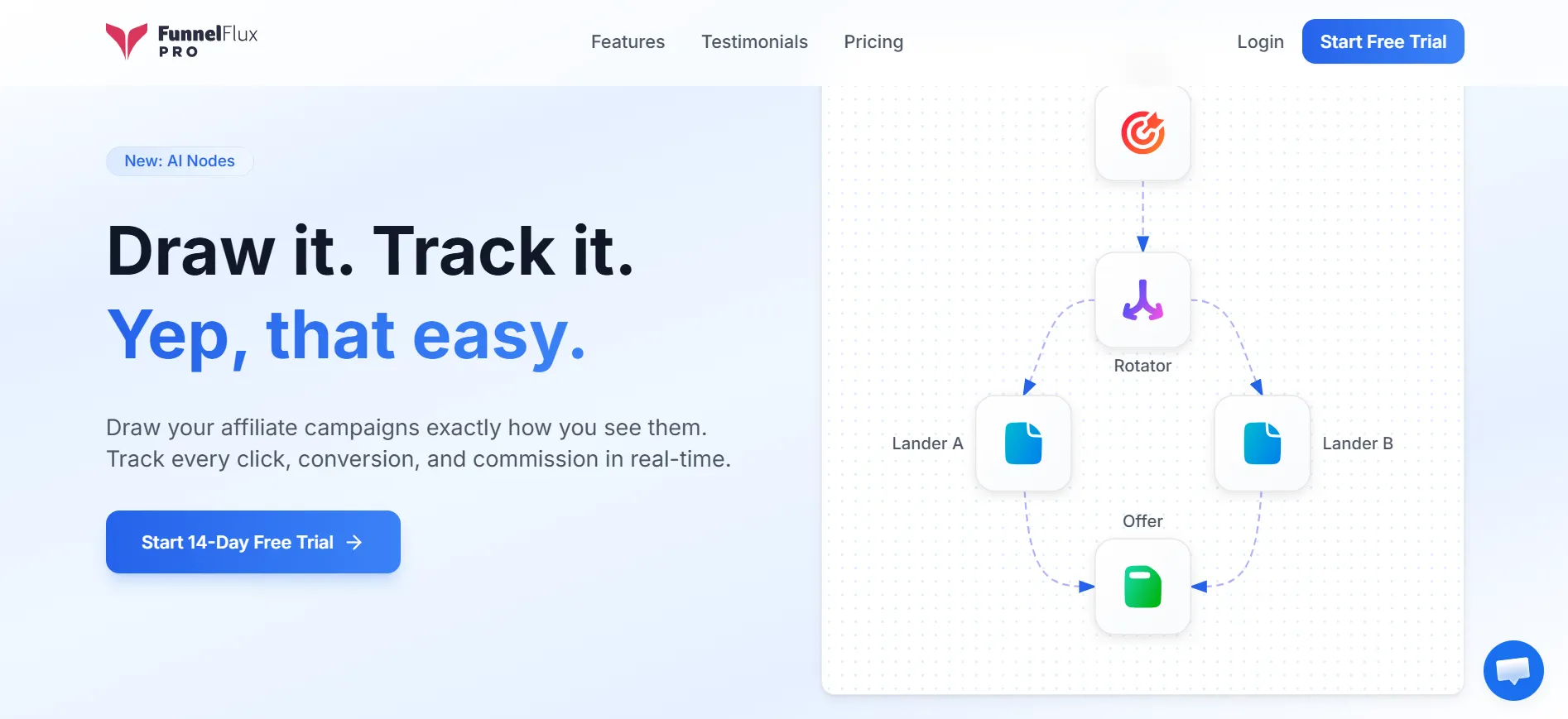
What stands out immediately is its structural approach to the interface. Instead of digging through rows of tracking data, you construct your funnels visually across a canvas, positioning traffic sources, landers, offers, and rotators as connected nodes and watching genuine conversion figures populate at each individual connection.
This approach makes locating exactly where a funnel is falling short substantially quicker.
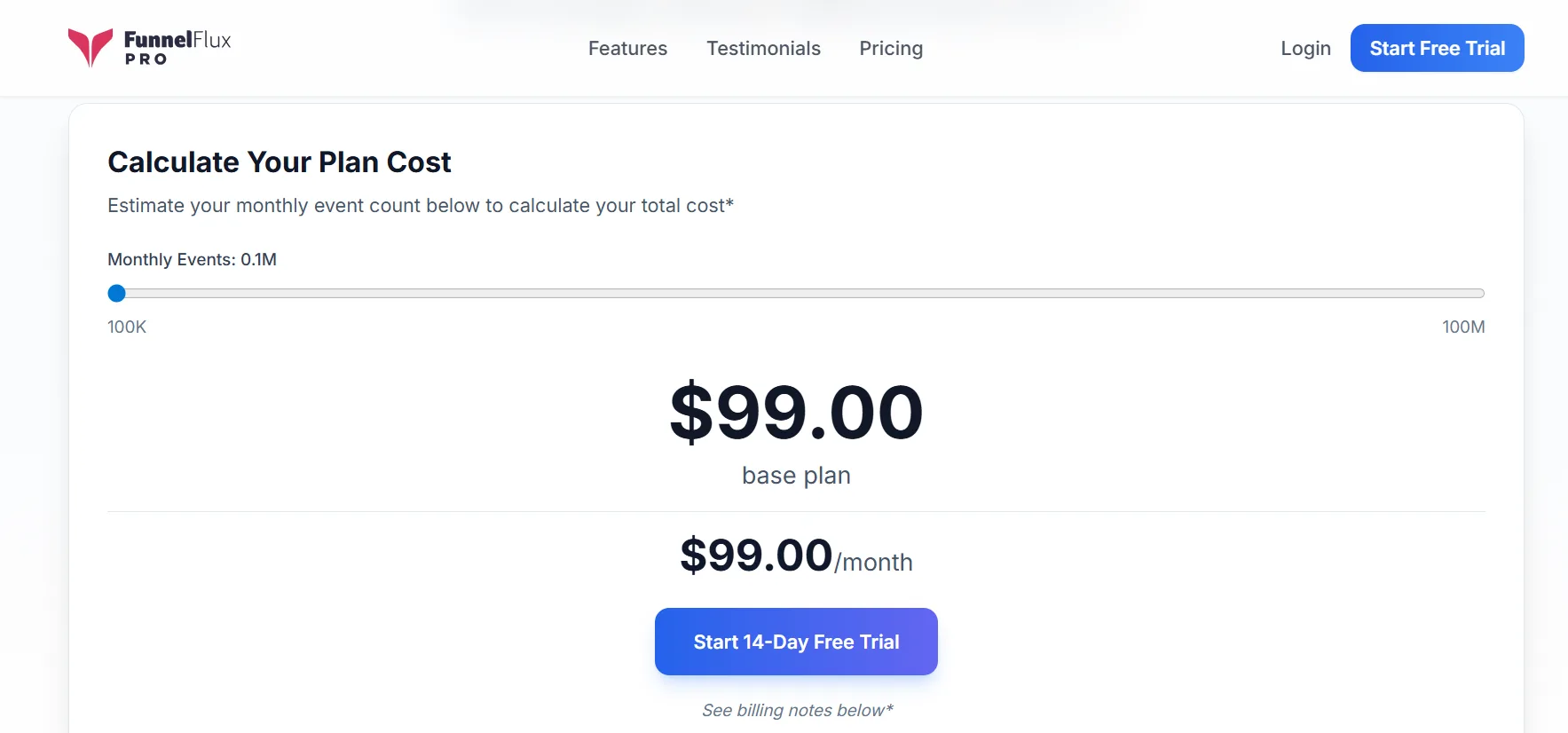
Pricing Snapshot Every plan includes a 14 day free trial, with no annual contract requirement anywhere in the pricing structure. Core: $99 monthly, 2 million tracked events included. Growth: $199 monthly, 5 million tracked events included. Scale: $299 monthly, 10 million tracked events included.
Anyone actively running paid traffic across multiple channels runs into the same everyday obstacle, disconnected performance data across various ad platforms with no single, unified view of the customer’s actual path, or clear insight into precisely which funnel stage is dragging results down.
FunnelFlux Pro was purpose built to solve this exact issue. Below is a closer look at the functionality that delivers genuine day to day value.
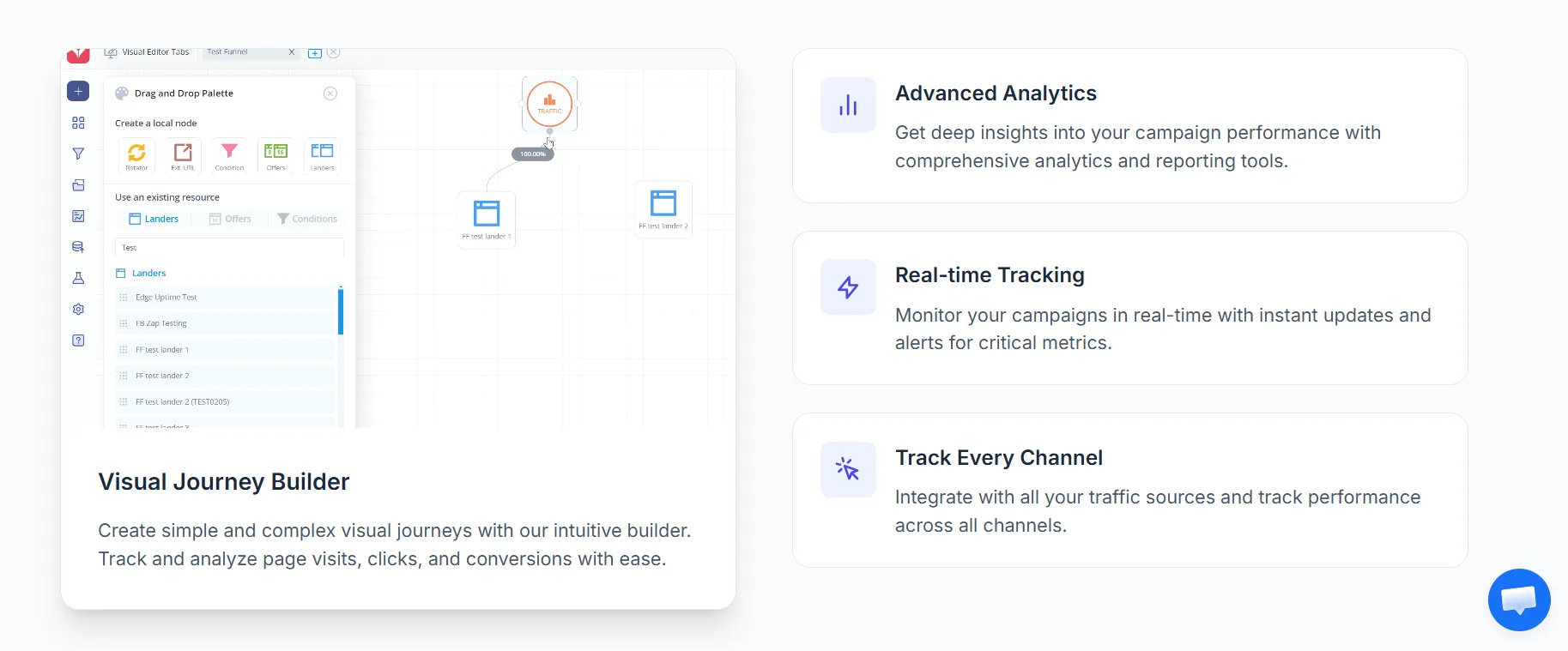
Visually Built Funnel Structure Your entire funnel setup gets constructed as a flowchart rather than buried inside nested configuration screens, turning even highly complex multi step campaigns into something quickly digestible.
Data Broken Down By Node Every individual point within your funnel, whether that is a landing page, offer, or splitter, produces its own separate conversion statistics, letting you determine exactly where visitors are dropping off rather than viewing one merged campaign number.
Server Side Postback Recording Conversions get logged through server side postbacks instead of relying solely on browser based pixels, which preserves data accuracy even as pixel blocking technology and privacy centric browser settings become more widespread.
Extensive Advertising Platform Integrations The platform connects to Facebook, Google, TikTok, Bing, Snapchat, and most well known native and push traffic sources, automatically importing spend figures alongside conversion outcomes.
Automated AI Powered Routing An optional, separately priced addon activates a routing node capable of automatically redirecting traffic toward better performing destinations based on real time statistical analysis, essentially automating a split test you would otherwise need to manually monitor.
Configurable Custom Events Up to 10 distinct custom conversion events can be tracked per funnel, particularly useful for anyone monitoring multiple stages of a longer purchase journey rather than one single conversion action.
Fast ClickBank Setup Pasting one single URL links ClickBank sales, refund, and rebill data directly into your FunnelFlux reporting, bypassing the manual postback configuration required by most other tracking platforms.
Who Can Use FunnelFlux Pro
Media Buyers Managing Multiple Traffic Sources Anyone allocating advertising budget across Facebook, Google, TikTok, and native platforms all at once benefits considerably from centralized cost and conversion data instead of piecing information together from separate ad account dashboards manually.
Affiliate Marketers Those running offers through ClickBank and comparable affiliate networks get a meaningfully faster setup process because of the native IPN connection, and the visual builder makes testing different prelander page variations simple without rebuilding funnels from scratch every single time.
Agencies Handling Multiple Clients Agencies overseeing paid campaigns for several client accounts simultaneously benefit substantially from centralized reporting on cost and conversion figures, removing the need to constantly switch between separate individual client dashboards.
Sites Combining Organic And Paid Efforts Even though its primary design focus is paid traffic, FunnelFlux’s cookieless tracking technology still functions reasonably well when applied to organic website visitors, making it a viable option for businesses running a combination of both traffic types.
The whole system operates around a visual canvas, where each piece of your funnel exists as a distinct node connected by lines representing the actual visitor path.
Every funnel automatically starts with a fixed traffic source node that cannot be deleted, functioning as the default arrival destination for any visitor who does not have a specific node assigned to them.
The permanent traffic source node provides a consistent starting point across every funnel you build, meaning visitors arriving without a specifically assigned destination still get accurately captured instead of slipping through an untracked gap.
Rotator nodes distribute incoming traffic across multiple destinations according to configured percentages, and several rotators can be stacked throughout a single funnel, simplifying the process of running parallel offers or landers concurrently.
Condition nodes allow routing decisions based on visitor characteristics such as country, device type, or operating system, permitting different treatment for mobile visitors from a specific region without needing to duplicate your entire funnel setup.
Automatic parameter accumulation built into lander and offer nodes carries query string data forward from your traffic source through to subsequent destination pages, eliminating the need for manual URL parameter configuration on every page.
The system links feature produces direct tracking URLs for any particular node located within a funnel, particularly helpful when testing a later funnel stage in isolation without inadvertently triggering earlier condition rules.
Global custom tokens allow you to define a single reusable variable, such as an approved country list, and apply it consistently across multiple different funnels rather than recreating identical logic each time.
Advanced settings support traffic source specific overrides on cost per entrance at the individual funnel level, useful when the exact same funnel gets deployed across accounts carrying different cost arrangements.
How Building A Funnel Actually Works
Setting up a live, properly tracked funnel proves noticeably simpler in practice than the extensive feature breakdown might suggest at first glance.
The process begins by creating a campaign, which functions purely as an organizational folder without its own settings, followed by naming and building a funnel inside that campaign.
Within the builder itself, you add a rotator node and connect it to your landing pages via the right click node menu, then repeat that process to wire in your relevant offers.
With rotator percentages set and every node properly connected, generating a tracking link from the traffic source node allows you to insert it directly into your ad platform of choice.
Moving from a completely blank campaign to a fully live tracked funnel typically takes only a few minutes once the builder’s general layout becomes familiar.
Automated, data informed traffic distribution has increasingly become central to how serious media buyers scale their campaigns, since manually monitoring split test results and adjusting traffic percentages by hand simply becomes impractical past a certain volume threshold.
FunnelFlux tackled this challenge through its AI routing node feature, offered as a separately purchased addon. Here is what genuinely happens behind the scenes.
Visually, the node functions exactly like a standard rotator positioned between incoming traffic and its various destinations, but internally it runs automated statistical reports on your conversion or revenue data using Bayesian inference methods rather than a straightforward percentage calculation.
You choose between two available optimization approaches, one targeting a specific conversion event such as a completed lead form, and another optimizing for revenue per view across all your recorded events collectively.
From there you configure a lookback window that determines how far back the system pulls historical data, along with a report frequency setting controlling how often routing percentages get recalculated, with FunnelFlux advising a minimum of 10 conversions before the resulting data can be trusted.
You can layer in segmentation by traffic source for funnels running across multiple advertising accounts simultaneously, plus select a routing goal that decides whether optimization occurs at the node level, individual page level, or a hybrid two step approach suited for funnels combining different node types.
More advanced users get further control through a sensitivity setting governing how aggressively traffic shifts toward the current top performer, along with caps and floors preventing any single variant from monopolizing traffic before the data solidly confirms it as the actual winner.
FunnelFlux Pro Pricing Plans
FunnelFlux operates on a usage based pricing structure tied directly to your monthly tracked event volume, organized into three primary tiers.
Core Plan
$99 monthly for up to 2 million tracked events, with any additional events billed at $10 per extra million. Includes the standard 14 day free trial along with monthly billing and zero annual contract obligation.
Growth Plan
$199 monthly for up to 5 million tracked events, matching the same $10 per extra million overage rate and identical trial and contract terms found on the Core plan.
Scale Plan
$299 monthly for up to 10 million tracked events, designed specifically for higher volume media buyers managing considerable traffic across multiple concurrent campaigns, with the same overage rate applying consistently.
Every single plan includes two free custom domains, with additional domains beyond that billed at $2 monthly each.
Data retention carries no expiration date while your subscription remains active, and canceling provides a 60 day grace period before your data is deleted, unless you choose to enroll in the $9 monthly standby plan to keep everything archived beyond that window.
The AI routing node addon is billed separately on top of whatever base plan you select, with lookback window and reporting frequency configuration options scaling according to your particular addon tier.
Worth mentioning as well, a fully self hosted version of FunnelFlux is also available, requiring you to manage your own VPS starting around $20 monthly in raw server costs, or alternatively a managed hosting package starting at $139 monthly if you would rather have FunnelFlux’s own team handle infrastructure management entirely on your behalf.
FunnelFlux generally maintains a favorable reputation among long time affiliates and experienced media buyers, with recurring feedback praising how significantly the visual builder simplifies configurations that would otherwise require considerably more time within a traditional tabular tracker.
Independent feedback also commonly points toward responsive, quick turnaround customer support along with steady, reliable bug fixing as ongoing strengths of the platform.
Pros and Cons: FunnelFlux Pro Review 2026
Pros
The visual flowchart builder makes multi step funnels considerably easier to understand and diagnose compared to conventional spreadsheet style tracking tools.
Granular node level conversion reporting reveals exactly where a funnel is losing visitors rather than forcing reliance on a single blended campaign figure.
Server side postback based tracking maintains reliable data accuracy even as pixel blocking and browser privacy restrictions continue expanding across the industry.
The AI routing node addon delivers a genuinely sophisticated, statistically grounded method for traffic optimization instead of a basic automated rule.
The $99 entry price point remains genuinely competitive relative to the depth of server side tracking and detailed reporting the platform actually provides.
Cons
Current bot filtering only strips recognized bot user agents from reporting data, rather than actively blocking that traffic from entering funnels outright.
The node based interface requires a genuine adjustment period for anyone transitioning from a simpler, tabular style tracking tool.
FAQs: FunnelFlux Pro Review 2026
It tracks clicks, conversions, and revenue generated across paid traffic sources including Facebook, Google, TikTok, native networks, push, and pop traffic, while also handling standard organic website traffic reasonably competently through its cookieless tracking method.
Yes, every available plan tier comes with a 14 day free trial covering complete access to all features, and none of the plan options require signing an annual contract.
Not through a dedicated active blocking mechanism at this point in time. Common bot user agents get automatically excluded from your reporting data, though full bot blocking capability remains listed as a high priority feature on FunnelFlux's development roadmap going forward.
It provides a native IPN connection specifically built for ClickBank, letting sales, refund, and rebill data flow directly into your reports through a single pasted URL, alongside broad integration support across most major advertising platforms.
No, AI routing nodes require a separately purchased addon subscription layered on top of your chosen base plan, with specific configuration options varying depending on which addon tier you select.
The original FunnelFlux operates as self hosted software requiring independent management of your own server infrastructure, whereas FunnelFlux Pro runs entirely in the cloud with all infrastructure fully handled on your behalf.
For anyone operating layered, multi step funnels where pinpointing the exact stage a visitor exits genuinely affects overall campaign performance, FunnelFlux Pro justifies its subscription cost without much hesitation.
The visual builder represents a genuine functional advantage over standard trackers rather than merely a design preference, fundamentally changing how quickly you can identify and resolve an underperforming campaign compared to reconstructing the story from tabular report data.
Set against typical spreadsheet style trackers commonly found within this software category, FunnelFlux clearly differentiates itself through granular node level reporting paired with the AI routing addon, together providing a depth of visibility and automated optimization capability that a basic rows and columns interface simply cannot deliver.
That said, expect a genuine adjustment period if switching over from a simpler tracking tool, since adapting to a flowchart based, node driven approach requires real time compared to reading a conventional performance table.
If your operation consists of a single landing page directed at one specific offer, a considerable portion of what makes FunnelFlux genuinely valuable will likely remain unused.
But for anyone managing branching funnels, running consistent split tests, or scaling paid traffic across multiple channels simultaneously, the value delivered relative to the price stands out clearly, and the trial period is genuinely worth using to determine whether the visual workflow aligns well with how you approach campaign management.
Hey, I’m Sonia Allen- a freelance content writer and senior SEO analyst at Digiexe, where I geek out over content and data-driven SEO. With seven years of digital marketing and affiliate marketing experience, I love sharing tips on everything from eCommerce to social media. You’ll catch my work on sites like AffiliateBay, and Digiexe.com and SchemaNinja, where I break down big ideas into practical advice. When I’m not writing or tweaking SEO strategies, I’m probably sipping coffee and dreaming up my next project!