
Oxylabs

- 175M+ global IP pool
- Coverage in 195+ countries
- IP authentication
- Username/password authentication
- Proxy endpoint generator
Decodo

- 125M+ global IP pool
- 195+ proxy locations
- Carrier targeting for mobile proxies
- Third-party tool integration
- Automation-friendly proxies
Webshare

- 80+ million IPs
- 195+ countries
- 99.7% success rate
- 24/7 Expert Support
- Flexible pay-as-you-go pricing
Here is a number that should make every digital marketer stop: ad fraud cost businesses an estimated $84 billion globally in 2023, and projections put 2026 losses significantly higher as programmatic advertising scale increases. Ad verification — the process of checking that your ads actually appear correctly, in the right locations, to the right audiences, without being served alongside brand-unsafe content— is now a fundamental requirement for any serious advertising operation.
Proxies are the infrastructure layer that makes ad verification possible. Without them, you cannot see what your ads look like to a user in Tokyo, Berlin, or São Paulo. You cannot verify that affiliate partners are running your creative correctly. You cannot check whether competitor ads are appearing illegally next to your branded keywords.
Quick answer: Bright Data for enterprise ad fraud protection and multi-market verification. Oxylabs for large-scale ad verification with SERP and web scraping APIs. SOAX for ISP-level ad serving accuracy. Decodo for agency-scale verification across multiple client campaigns.
What Makes a Proxy Good for Ad Verification? (The Part Others Skip)
The proxy must match the target audience profile exactly. If your ad is targeted at 35-44 year-old urban professionals in Chicago, verifying from a datacenter IP in Virginia tells you nothing. Verification requires residential proxies from Chicago, ideally from ISPs that match your target demographic’s carrier profile. City-level targeting is the minimum requirement. ISP-level targeting is ideal.
Mobile-first verification is non-negotiable in 2026. Over 60% of digital ad spendnow goes to mobile placements. Many ad formats — in-app ads, mobile video, push notifications — are only visible on mobile carrier IPs. Verifying mobile ad placementsrequires mobile proxies (4G/5G carrier IPs), not desktop residential ones.
Speed matters for display ad verification. Ads are often served dynamically and may not appear in the first 2 seconds of a page load. But they also may not persist long after the initial load. Verification tools need fast proxy connections that load the full page including all ad slots before the session times out.
Affiliate ad verification has different requirements from brand campaign verification. Brand campaign verification needs geo-diversity — checking the same campaign across dozens of markets. Affiliate verification needs session persistence — checking the same affiliate’s site repeatedly from stable IPs to catch fraudulent ad substitution that affiliates only show to infrequent visitors.
The 2026 angle others are not writing about: AI-generated ad fraud. In 2026, ad fraud has evolved to include AI-generated fake inventory — sophisticated fake publisher sites that look legitimate to automated verification tools. Effective ad verification now requires human-browser-fingerprint-matching proxies paired with real browser rendering, not just IP checking. Providers that integrate with anti-detect browsers are necessary for catching this new fraud vector.
9 Best Proxies for Ad Verification in 2026
1. Oxylabs — Best for Enterprise Ad Verification With SERP Checking
IP Pool: 177M+ Pricing: $30/month to $2,000/month Ad Verification Tools: Web Scraper API, SERP Scraper API, ZIP/ISP-level targeting Website: oxylabs.io
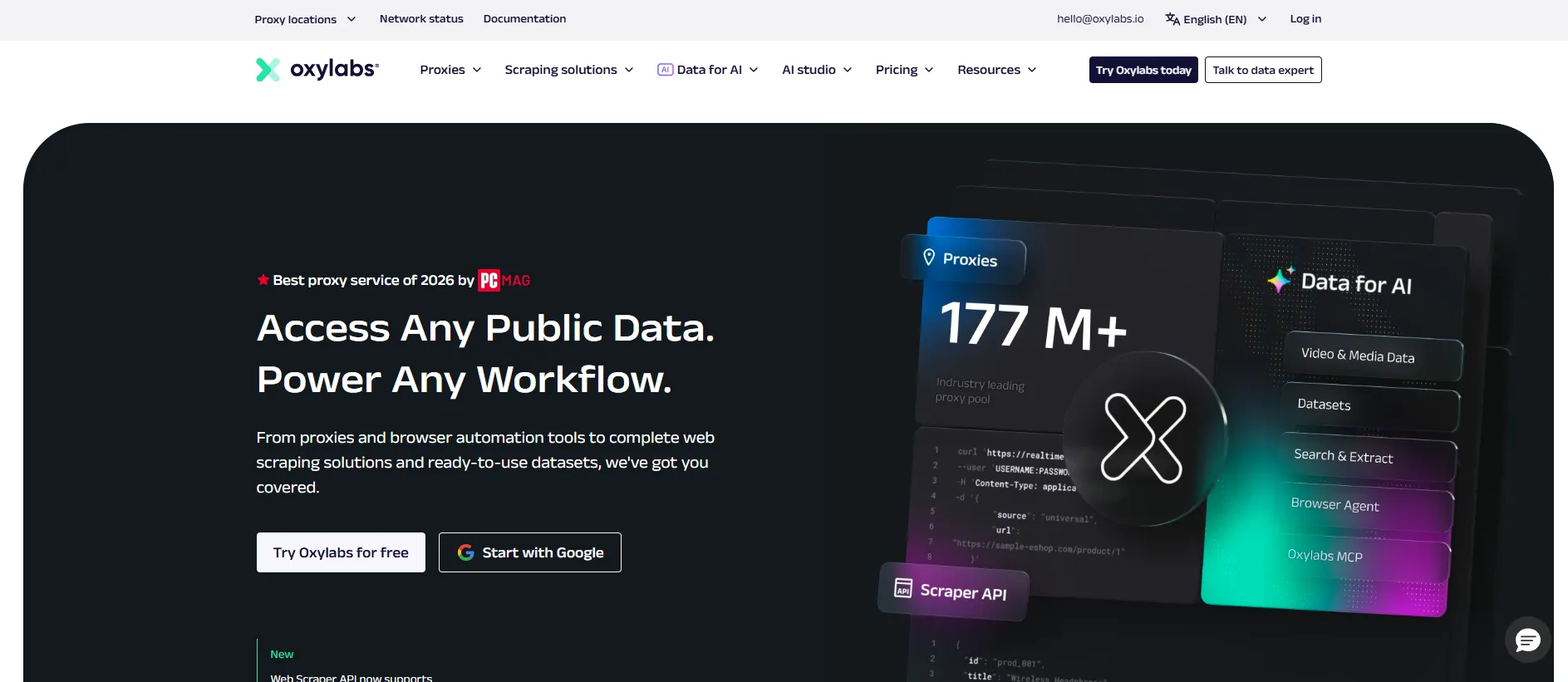
Oxylabs is the strongest option for ad verification programs that combine display ad checking with paid search monitoring. Its SERP Scraper API checks exactly which ads are appearing for specific keywords in specific locations — critical for brand protection (checking competitor trademark bidding), keyword ownership verification, and affiliate compliance monitoring.
The 177M+ pool with ZIP code targeting delivers the most granular geographic ad verification available. Oxylabs’ infrastructure handles the JavaScript rendering required to see dynamically served display ads — static page loads miss the vast majority of programmatic ad placements.
What others do not tell you: Oxylabs’ OxyCopilot AI tool can be used to automate ad verification workflows — setting up recurring checks across multiple markets and flagging anomalies without manual monitoring configuration. For enterprise ad ops teams running verification at scale, this reduces the manual overhead significantly.
The honest downside: High entry price. Full verification programs at enterprise scale cost $500 to $2,000/month.
Best ad verification use cases: Paid search brand protection, programmatic display verification, multi-market campaign audit, competitor keyword infringement monitoring.
2. Decodo — Best for Agency Ad Verification Across Multiple Clients
IP Pool: 115M+ Pricing: From $1.50/GB Website: decodo.com
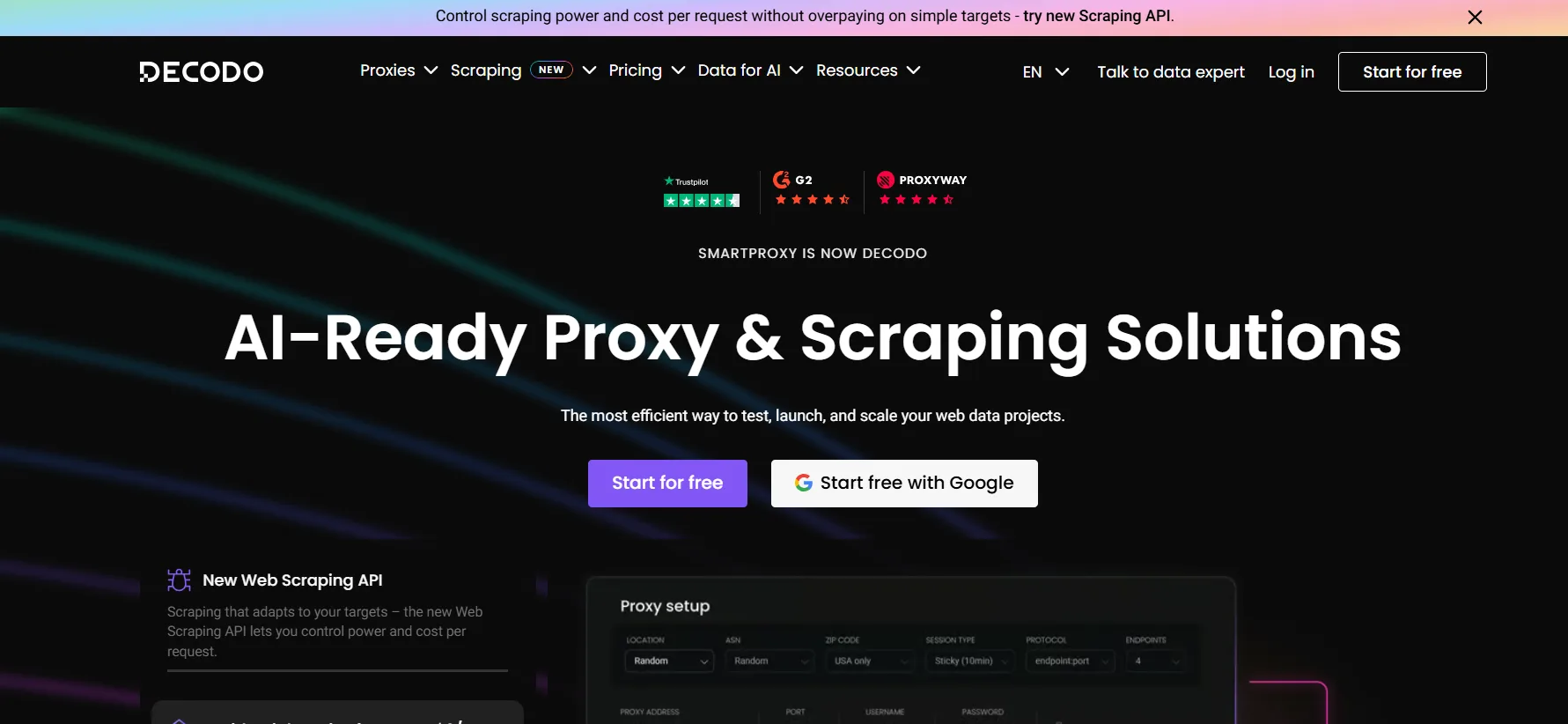
Decodo’s pricing structure and global coverage make it the most practical option for performance marketing agencies running ad verification across many client campaigns simultaneously. At $1.50/GB with 195+ country coverage, an agency can run ongoing verification for 10 to 20 clients without the costs becoming prohibitive.
The API access and proxy zone management make it straightforward to set up separate verification pools for different clients — keeping their data isolated and their verification sessions independent. Sticky sessions of up to 24 hours support multi-step affiliate journey verification.
Best ad verification use cases: Multi-client agency ad verification, affiliate journey checking, display ad placement confirmation across markets.
3. Webshare — Best for Small Campaign Verification
IP Pool: 30M+ Pricing: Free to $1.40/GB Website: webshare.io
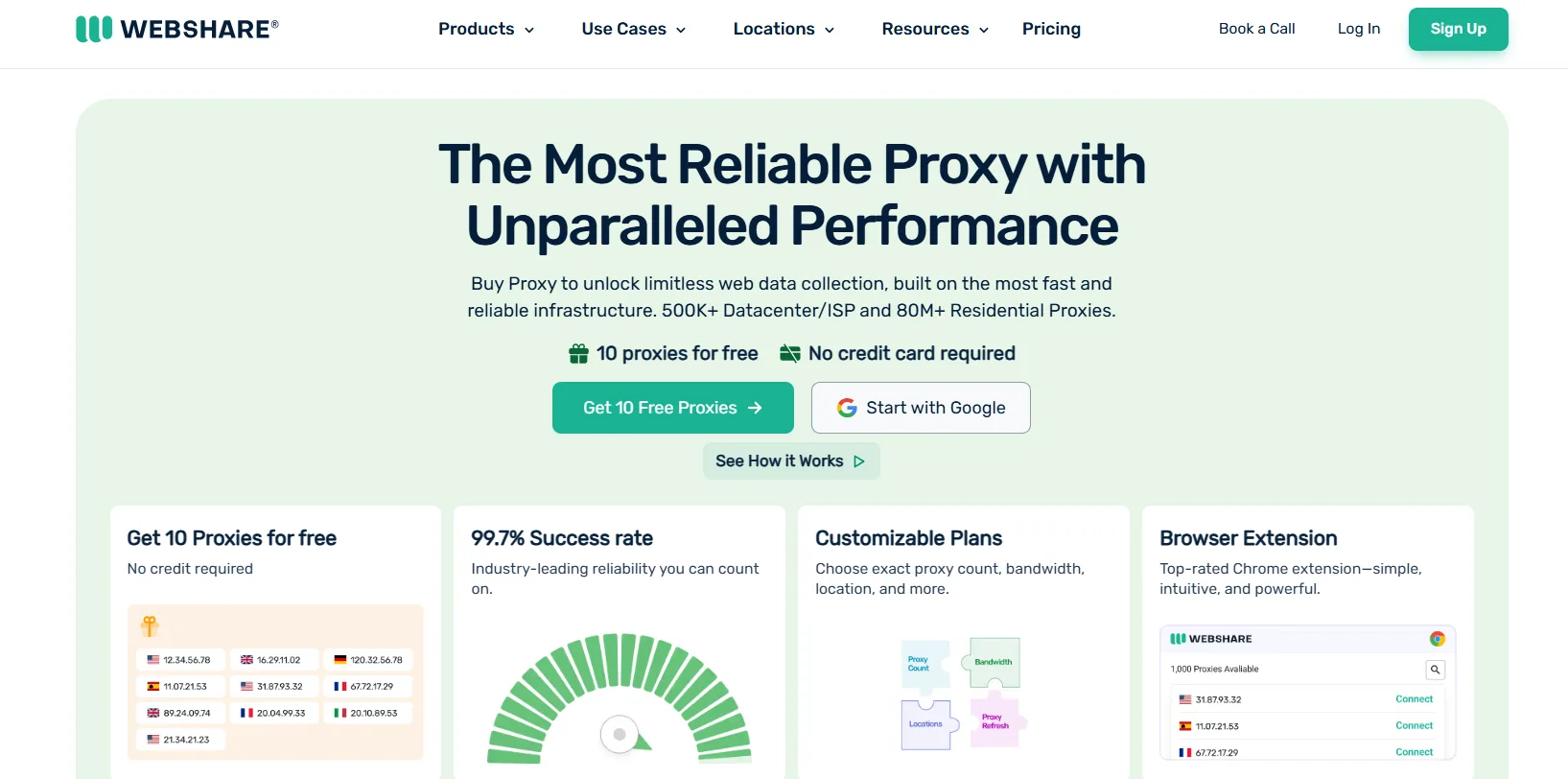
For small advertisers running campaigns in a handful of markets and needing basic verification — do my ads show up? are they appearing on brand-safe content? — Webshare’s accessible pricing makes ad verification achievable without enterprise infrastructure. The free tier supports lightweight verification checks; paid residential plans support more systematic verification programs.
Best ad verification use cases: Small advertiser campaign checking, basic geographic ad appearance verification.
4. Bright Data — Best for Enterprise Ad Fraud Protection
IP Pool: 150M+ Pricing: From $4.20/GB PAYG Website: brightdata.com
Bright Data’s combination of the largest compliant residential IP pool, mobile proxies, and Web Unlocker (which handles sophisticated anti-bot systems automatically) makes it the most comprehensive option for enterprise ad fraud protection programs. It is the provider most used by ad verification platforms and brand safety companies as their underlying infrastructure.
What others do not tell you: Bright Data’s Web Unlocker product handles JavaScript-heavy ad serving environments that standard proxies miss. Complex programmatic ad platforms that load ads through multiple nested iframes and JavaScript calls are only visible with full browser rendering — Web Unlocker delivers this without you building a full headless browser infrastructure.
Best ad verification use cases: Enterprise brand safety monitoring, full-stack programmatic ad verification, ad fraud platform infrastructure.
5. SOAX — Best for ISP-Accurate Display Ad Verification
IP Pool: 191M+ claimed Pricing: From $3.60/GB Website: soax.com
Display ad serving is frequently ISP-specific. Programmatic platforms sometimes serve different ad creative or different advertisers depending on the IP’s ISP profile. SOAX’s ISP-level targeting ensures ad verification reflects what actual consumers on specific carrier networks see — not an average of all consumers in a geographic area.
Best ad verification use cases: Display ad ISP-specific verification, carrier-targeted ad creative checking, telco audience segment verification.
6. IPRoyal — Best for Affiliate Ad Verification
IP Pool: 32M+ Pricing: From $1.75/GB; non-expiring Website: iproyal.com
Affiliate ad fraud — where affiliates show legitimate ads to occasional visitors but fraudulent or substituted content to frequent checker IPs — requires verification from IPs that look like genuine first-time visitors. IPRoyal’s large pool of residential IPs with non-expiring credits supports returning to the same affiliate sites at irregular intervals from fresh IPs, catching substitution fraud that repeating verification from the same IP would miss.
Best ad verification use cases: Affiliate compliance monitoring, sub-affiliate creative verification, coupon site ad checking.
7. ProxyEmpire — Best for Mobile Ad Verification
IP Pool: 30M+; 170+ countries Pricing: Custom; $1.97 trial Website: proxyempire.io
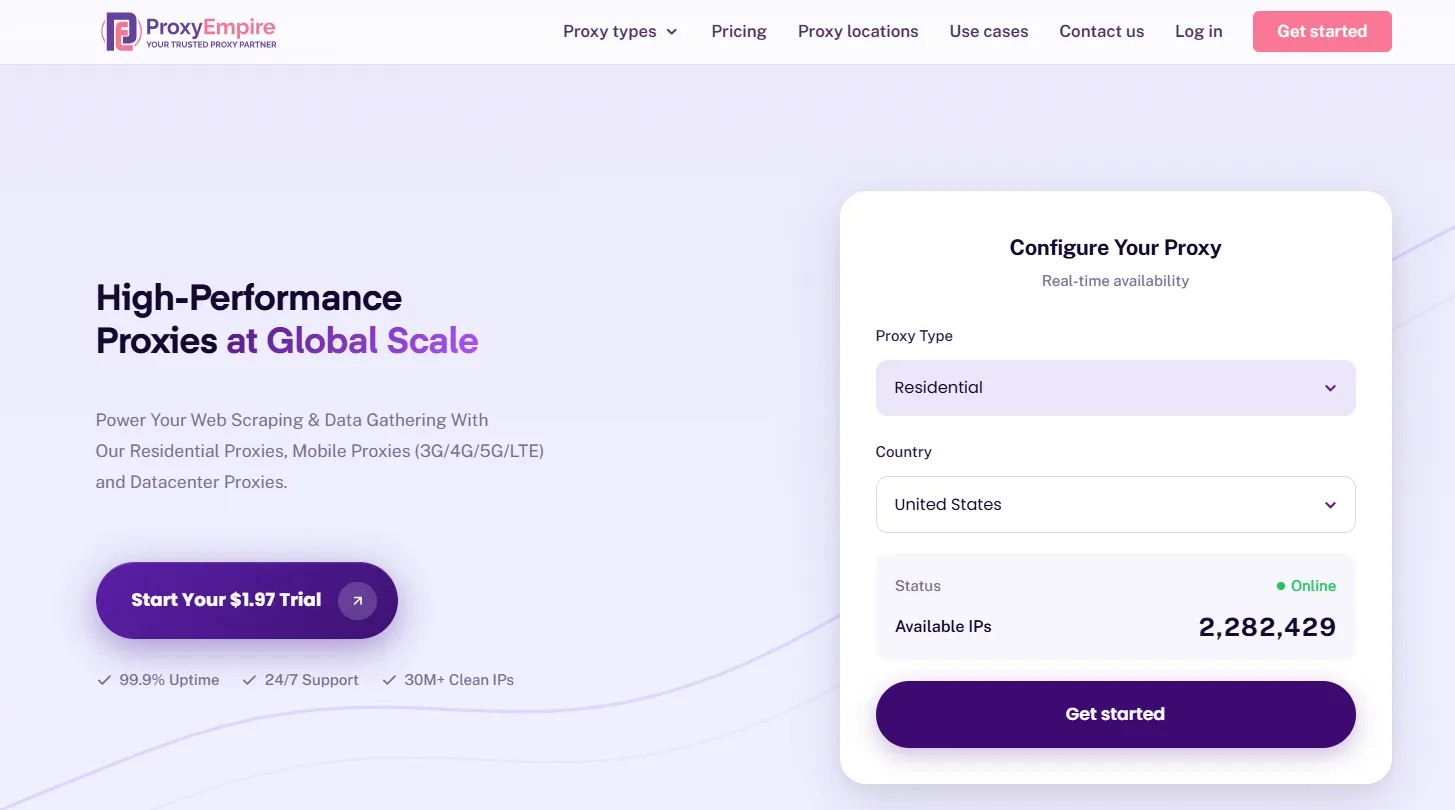
Mobile ad placements — in-app advertising, mobile video, push notification ads — are only verifiable from real mobile carrier IPs. ProxyEmpire’s 4G/5G mobile proxy network across 170+ countries is the strongest option for verifying mobile-specific ad placements that desktop residential proxies simply cannot see.
What others do not tell you: Many in-app ad placements are device-fingerprint verified — they only serve to connections that match a real mobile device fingerprint. ProxyEmpire’s mobile proxies, used together with an antidetect browser configured for mobile fingerprints, produce the most accurate in-app ad verification results.
Best ad verification use cases: In-app mobile ad verification, 4G/5G carrier-specific ad checking, mobile-exclusive placement monitoring.
8. Rayobyte — Best for Compliance-Documented Ad Verification
IP Pool: 40M+ Pricing: Custom Website: rayobyte.com
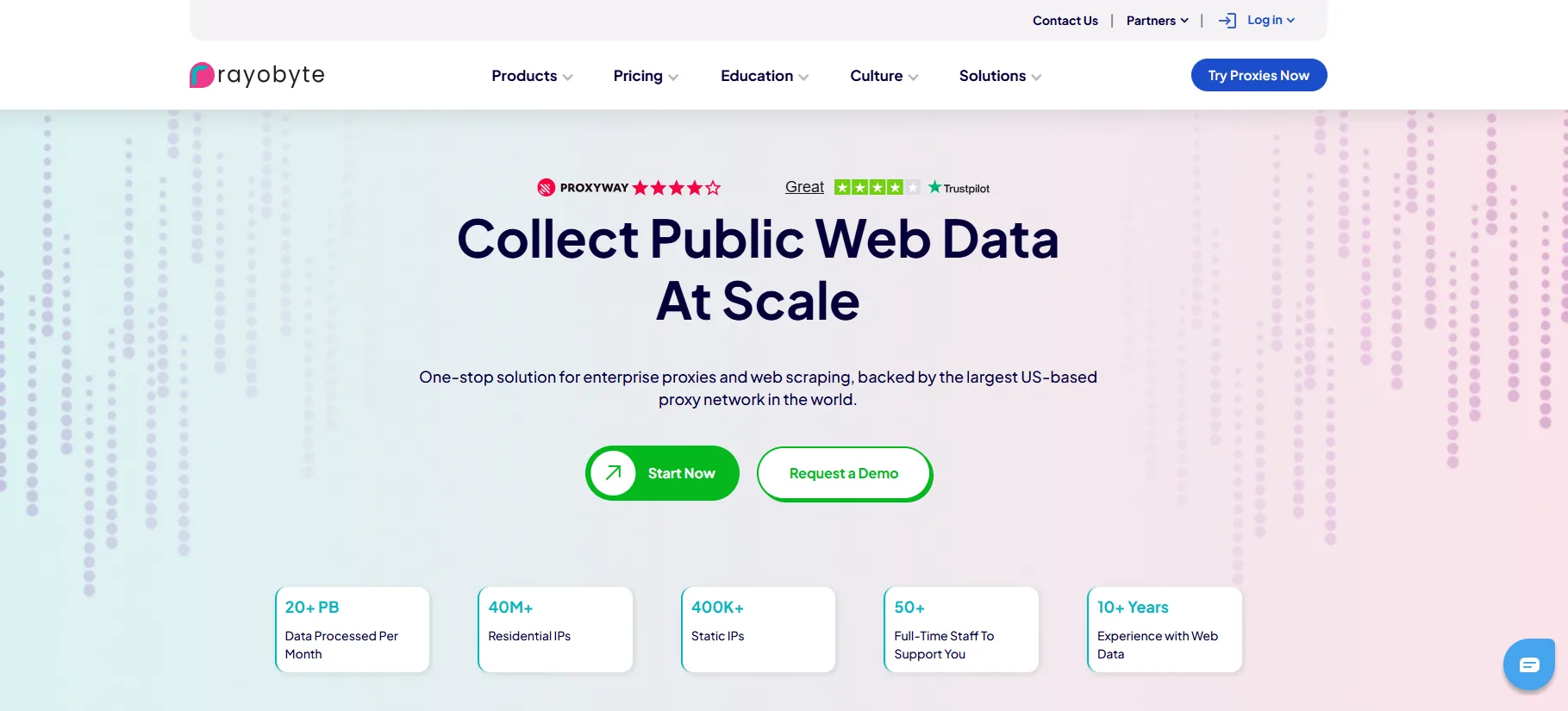
For regulated industries — financial services, healthcare, legal — where ad placement verification needs to be documentable and auditable, Rayobyte’s ethics-first sourcing and US-centric coverage provides the compliance foundation. Ad verification logs from Rayobyte can be presented as evidence of due diligence in compliance reviews.
Best ad verification use cases: Regulated industry ad compliance documentation, legal-grade ad placement evidence, financial services campaign verification.
9. DataImpulse — Best for High-Frequency Low-Cost URL Verification
IP Pool: 90M+ Pricing: From $1/GB Website: dataimpulse.com
For large-scale affiliate networks running thousands of publisher URL checks per day — verifying that landing pages are active, creative is correct, and redirects are functioning — DataImpulse’s $1/GB pricing and non-expiring credits provide the most cost-efficient infrastructure for high-frequency simple verification jobs.
Best ad verification use cases: Mass URL checking, redirect verification, landing page availability monitoring, affiliate link validation.
Quick Comparison Table
Provider | IP Pool | Starting Price | Best For | Free Trial |
Oxylabs | 177M+ | From $6/GB | Enterprise verification, SERP ad checking | Yes (limited) |
Decodo | 115M+ | From $1.50/GB | Agency ad verification, multi-client | 100MB free |
Webshare | 30M+ | From $1.40/GB | Small campaign verification | 10 proxies free |
Bright Data | 150M+ | From $4.20/GB PAYG | Enterprise fraud protection, all ad formats | Yes (business) |
SOAX | 191M+ claimed | From $3.60/GB | ISP-targeted display ad verification | Paid trial |
IPRoyal | 32M+ | From $1.75/GB | Budget verification, affiliate checking | No |
ProxyEmpire | 170+ countries | Custom | Mobile ad verification, in-app checking | $1.97 trial |
Rayobyte | 40M+ | Custom | Compliance-documented verification | No |
DataImpulse | 90M+ | From $1/GB | High-frequency URL verification at low cost | 5GB for $5 |
Which Ad Verification Proxy Is Right for You?
“I run campaigns across multiple international markets and need to verify ad appearances.” Bright Data or Oxylabs — both deliver the geo-depth and JavaScript rendering needed for international programmatic verification.
“I manage ad verification for multiple agency clients.” Decodo — best economics for multi-client verification workflows.
“My ads are primarily mobile — in-app and mobile video.” ProxyEmpire — the strongest mobile carrier proxy network for mobile-specific verification.
“I need to check that affiliate partners are running my creative correctly.” IPRoyal — non-expiring credits and large IP pool for irregular affiliate checking from fresh IPs.
“I have a small budget and need basic campaign verification.” Webshare — free tier for lightweight verification; paid residential for systematic checking.
FAQs: Best Proxies for Ad Verification in 2026
What is ad verification and why do I need proxies?
Ad verification is the process of checking that your advertising campaigns are running correctly — right creative, right placement, right geography, no fraud. Proxies let you see ads from the perspective of users in different locations without revealing your identity as the advertiser, which would trigger different ad serving.
Can I verify mobile ads with desktop residential proxies?
No. Many mobile-specific ad placements — in-app ads, carrier-targeted formats — only serve to connections that match mobile device and carrier profiles. You need mobile proxies (4G/5G carrier IPs) for accurate mobile ad verification.
How do I catch affiliate ad fraud with proxies?
Visit the same affiliate sites from different IPs at irregular intervals — not always from the same verification checker IP. Affiliates running substitution fraud often whitelist known verification IPs. Fresh residential IPs from a large pool are harder to whitelist and more likely to see the fraudulent creative.
Quick Links
Final Thoughts: Best Proxies for Ad Verification in 2026
Ad verification without proxies is like auditing your own accounts — you only see what you are supposed to see. Proxies give you the independent third-party view that makes verification meaningful.
The right choice depends on your primary verification need. Enterprise brand safety needs Bright Data or Oxylabs. Mobile ad verification needs ProxyEmpire. Affiliate compliance needs IPRoyal’s fresh IP pool. Agency verification programs fit best with Decodo.
All pricing verified from publicly available sources as of October 2026.
