
The Study That Divided the SEO World This Week
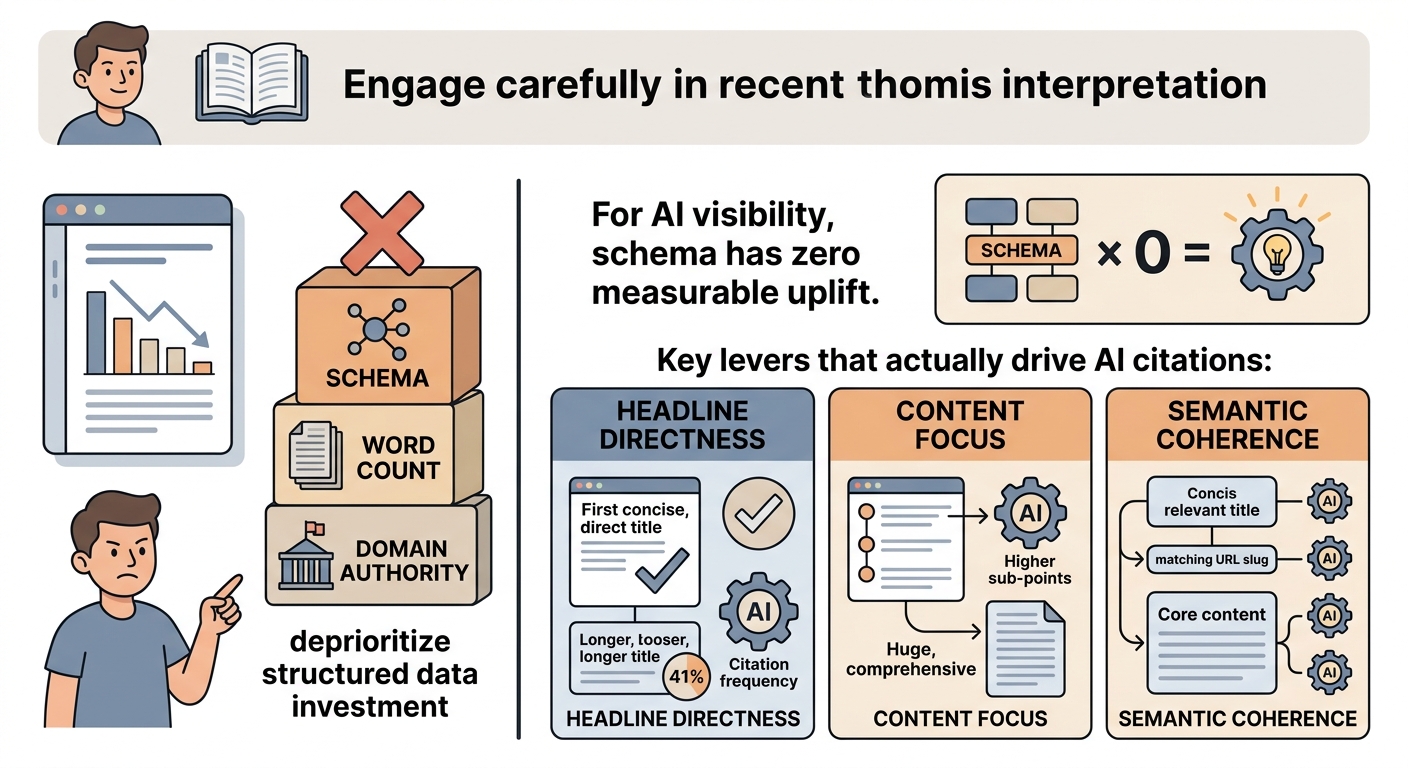
Ahrefs dropped a study this week that has been generating unusually heated debate across SEO communities, and it is worth engaging with carefully rather than dismissing. The finding: adding schema markup to pages produced no measurable uplift in how frequently those pages were cited by AI systems including Google AI Overviews, AI Mode, and ChatGPT.
The conclusion Ahrefs drew — that schema does not improve AI visibility — has been interpreted by some as a reason to deprioritise structured data investment entirely. That interpretation is wrong, but the finding itself is real and important.
Pages with headlines that directly answer the question get cited by ChatGPT 41% of the time, while pages with loosely related headlines drop to 29%. ChatGPT prefers focused shorter content over comprehensive guides. Pages covering 26 to 50% of ChatGPT’s fanout sub-queries get cited more than pages covering 100%. Pages with a semantically relevant title and URL slug are more likely to get cited by ChatGPT.
These are the signals that actually drive AI citation frequency. Not schema. Not word count. Not domain authority alone. Headline directness, content focus, and semantic coherence between headline, URL, and content are the three primary levers the Ahrefs data identified.
Why Schema Still Matters — Just for Different Reasons
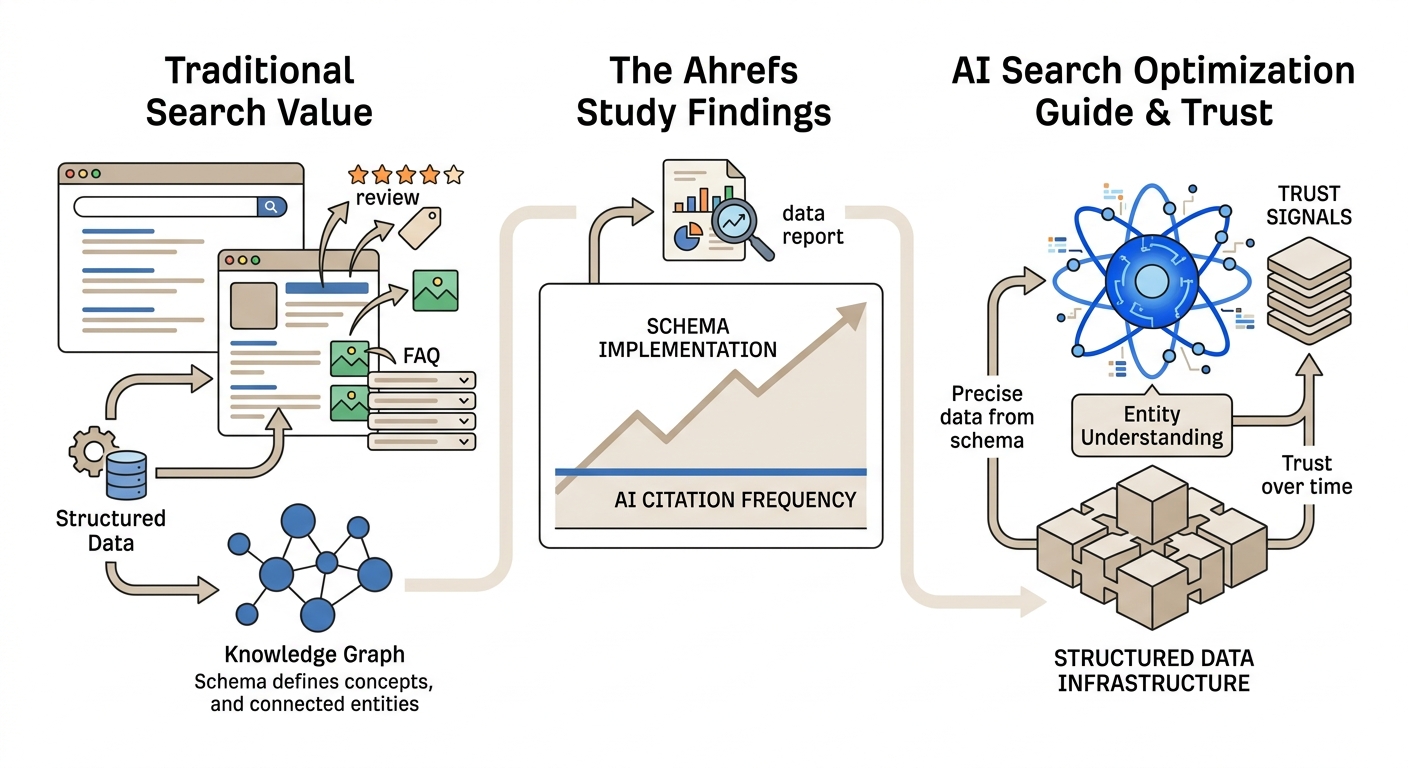
Schema markup’s primary value has always been in traditional search — rich snippets, FAQ dropdowns, review stars, and the entity disambiguation that supports Knowledge Graph inclusion. The Ahrefs study measured AI citation frequency specifically, and found schema did not move that needle. That is not the same as saying schema is worthless.
The Google official AI search optimisation guide published earlier this month specifically includes structured data as a technical SEO foundation for AI search. The mechanism is indirect: schema helps Google understand your entity with precision, which builds the trust signals that influence AI system source selection over time. It is infrastructure, not a direct citation trigger.
The practical implication is clear: do not implement schema expecting it to immediately boost AI citation rates. Do implement schema because it supports traditional rich results, entity clarity, and the underlying trust architecture that AI citation draws from. The two goals require the same investment — they just operate on different timescales.
The Headline Strategy That Actually Moves the Number
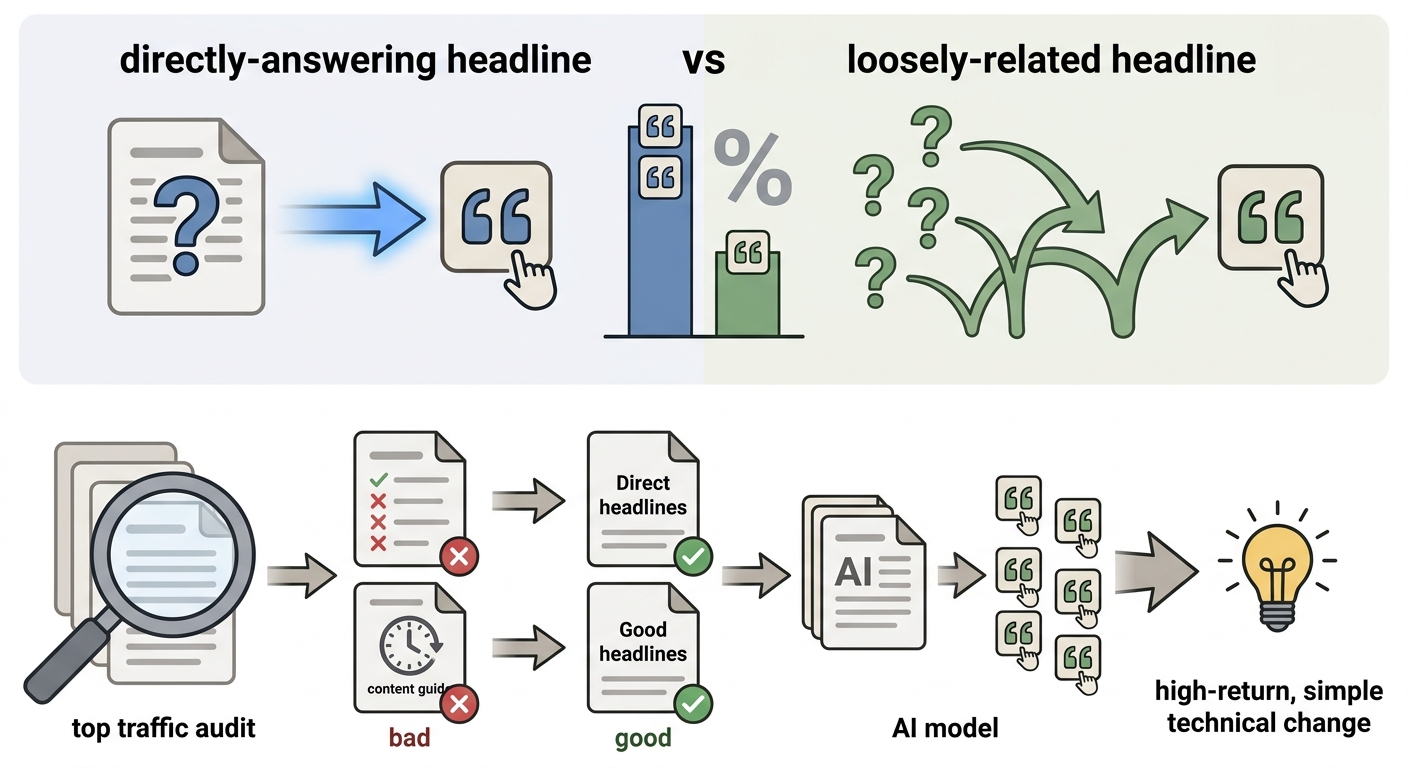
The Ahrefs finding that pages with directly-answering headlines get cited 41% of the time versus 29% for loosely-related headlines is the most immediately actionable data point in the study.
That is a 41% relative improvement in citation rate from changing nothing except how directly your headline answers the target question.
Audit your top 20 articles by traffic and ask a simple question about each headline: does this headline directly answer the question a reader would have typed into a search bar? “The Best Coffee Makers Under $100 in 2026” — yes. “Everything to Know About Coffee Makers” — no. “Coffee Maker Guide 2026” — no.
The direct headline is the one AI cites. Rewriting non-direct headlines on your existing high-traffic articles is probably the highest-ROI technical change you can make to AI citation rates right now.
💬 Reddit — r/TechSEO debate on the Ahrefs schema and AI citation study: 🔗 https://www.reddit.com/r/TechSEO/search/?q=Ahrefs+schema+AI+citation+no+impact
🐦 X/Twitter — SEO community split on the Ahrefs schema finding: 🔗https://x.com/search?q=Ahrefs+schema+markup+AI+Overviews+citation+2026&f=live
💬 Quora — does schema markup help with AI search citations in 2026: 🔗https://www.quora.com/search?q=schema+markup+AI+search+citation+help+2026
Quick Links:
