
Oxylabs

- 175M+ global IP pool
- Coverage in 195+ countries
- IP authentication
- Username/password authentication
- Proxy endpoint generator
Decodo

- 125M+ global IP pool
- 195+ proxy locations
- Carrier targeting for mobile proxies
- Third-party tool integration
- Automation-friendly proxies
Webshare

- 80+ million IPs
- 195+ countries
- 99.7% success rate
- 24/7 Expert Support
- Flexible pay-as-you-go pricing
Here is a stat that puts everything in context: global e-commerce sales are forecast to reach $6.88 trillion in 2026, up from $6.42 trillion in 2025. Behind every competitive e-commerce operation — whether it is an Amazon seller, a Shopify brand, or a marketplace analyst — is a proxy infrastructure quietly doing the heavy lifting.
E-commerce proxies power four critical activities: scraping competitor product data, monitoring prices, managing multiple seller accounts, and verifying that your own listings look correct from different locations. Without them, platforms like Amazon, Walmart, and eBay block automated requests within minutes.
Quick answer: Oxylabs for enterprise Amazon and marketplace scraping. Decodo for agencies and mid-market teams. Webshare for solo sellers and small shops who need basic competitor research without a big budget.
What Makes a Proxy Good for E-Commerce? (The Part Others Skip)
Most guides tell you to look for “big IP pools” and “residential proxies.” That is true, but incomplete. Here is what actually matters for e-commerce specifically:
Amazon and Walmart are the hardest targets. These platforms have some of the most aggressive bot detection systems in the world. During Black Friday 2024, online sales hit $10.8 billion in a single day with prices changing multiple times per hour. The anti-bot systems protecting those pages are built to match that scale. Residential proxies are non-negotiable — datacenter IPs get blocked on Amazon almost immediately.
Session persistence matters for cart workflows. If you are simulating a shopping workflow — browse, add to cart, checkout — you cannot keep changing IPs. A mid-session IP rotation breaks the session. You need sticky sessions for multi-step e-commerce flows.
ISP-level targeting gives you cleaner pricing data. Many e-commerce platforms show different prices based on your detected location and ISP. Using an IP from Comcast in Ohio shows you what an Ohio Comcast subscriber sees — which may be different from what a New York Verizon subscriber sees. For accurate price intelligence, ISP-level targeting matters.
The product you need: E-Commerce Scraper API vs raw proxies. If you are running a large-scale price monitoring operation and have developer resources, raw rotating residential proxies plus your own scraper works. If you do not have that, providers like Oxylabs and Bright Data offer E-Commerce Scraper APIs that handle Amazon, Walmart, and eBay automatically, returning clean structured JSON data without you building anything.
9 Best Proxies for E-Commerce in 2026
1. Oxylabs — Best for Amazon and Enterprise Marketplace Scraping
IP Pool: 177M+ residential IPs Pricing: $30/month (5GB), $100/month (20GB), $500/month (125GB), $2,000/month (1TB) E-Commerce API: Yes — dedicated Amazon and Walmart scrapers with pre-parsed JSON output Website: oxylabs.io
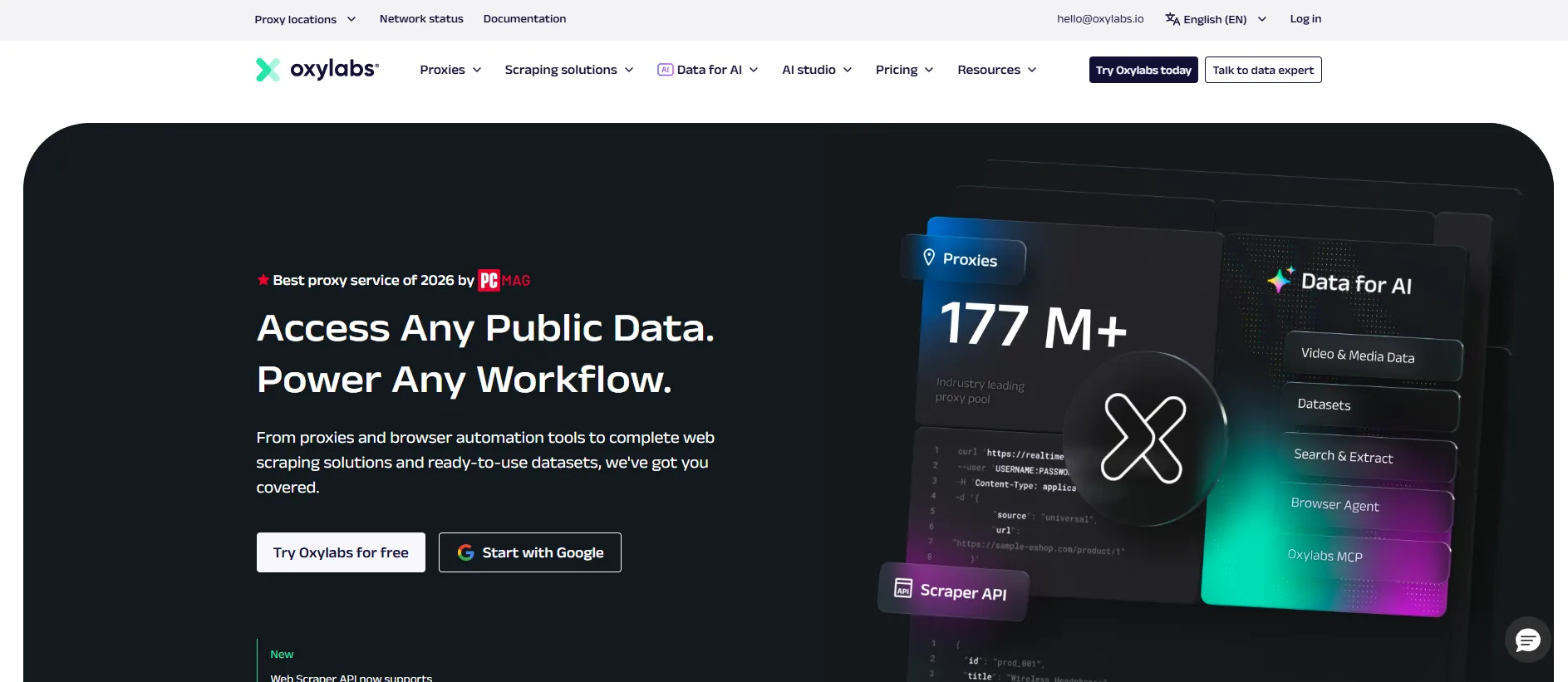
Oxylabs is the go-to for teams that scrape Amazon, Walmart, or eBay at serious volume. Its dedicated E-Commerce Scraper API is built specifically for these platforms — it handles JavaScript rendering, CAPTCHA solving, IP rotation, and data parsing automatically. You send a product ASIN or URL; you get back clean structured data. No building your own parser, no dealing with blocks.
Success rates consistently exceed 99% even on Amazon’s aggressive bot detection. The 177M+ IP pool includes ZIP-code level targeting, so you can see exactly what a buyer in a specific zip code sees — which matters when Amazon shows location-specific pricing, Prime delivery estimates, and Buy Box winners differently by geography.
What others do not tell you: Oxylabs is one of the few providers to offer pre-built Amazon dataset delivery — instead of scraping yourself, you subscribe to a regularly updated Amazon product dataset. For large retailers that need comprehensive catalog data rather than just a few competitor ASINs, this is significantly more cost-effective than running your own scraping infrastructure.
The honest downside: Too expensive for small sellers. At $6/GB on the entry plan, you pay a premium that only makes sense at mid-to-large scale. Not practical for a Shopify store doing light competitor checks.
Best e-commerce use cases: Amazon price and Buy Box monitoring at scale, Walmart product data collection, marketplace listing optimization, dynamic repricing data pipelines.
2. Decodo — Best Overall Value for E-Commerce Agencies
IP Pool: 115M+ residential IPs Pricing: From $1.50/GB residential; 14-day money-back guarantee E-Commerce API: Yes — eCommerce Scraping API at $0.08/1,000 requests Website: decodo.com
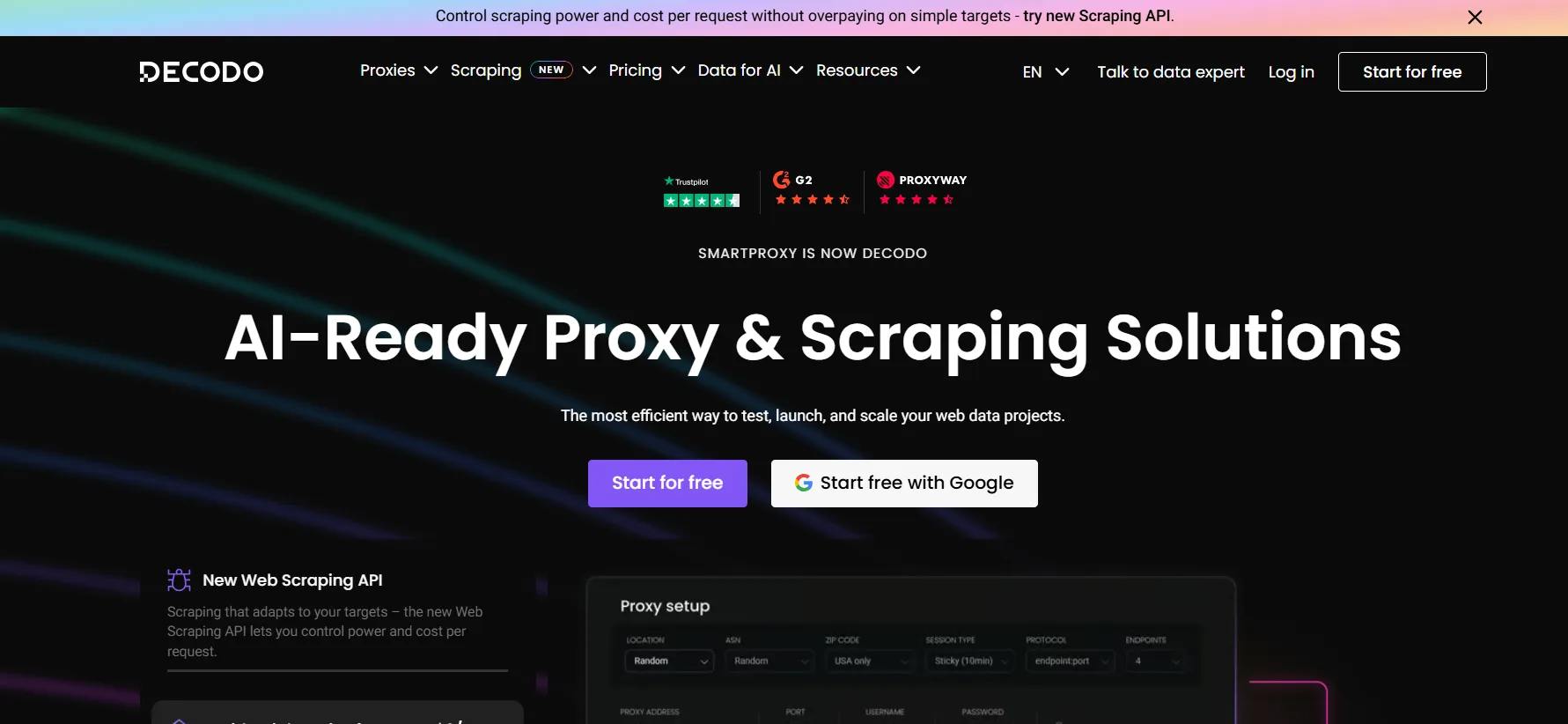
Decodo is the best price-to-performance option for e-commerce teams that need to monitor across multiple retailers without enterprise budgets. Its eCommerce Scraping API at $0.08 per 1,000 requests makes large-scale monitoring economically viable — tracking 10,000 product prices daily costs roughly $24 per month in API credits, which fits most agency and mid-market business cases.
The 99.86% success rate from independent testing holds up on major retail targets, and the 115M+ IP pool provides enough diversity to avoid pattern detection across high-frequency scraping jobs. Sticky sessions of up to 24 hours support multi-step cart workflows.
What others do not tell you: Decodo launched an AI Parser in 2026— you describe what data you want from a product page in plain English, and it extracts it automatically without you writing any CSS selectors or XPath. For e-commerce teams doing product research across many different retailer layouts, this removes a significant technical bottleneck.
The honest downside: PAYG pricing jumps to $8.50/GB, which can surprise teams that go over their plan. Monitor usage carefully during seasonal peaks.
Best e-commerce use cases: Multi-retailer price monitoring, competitor product listing research, agency clients across different platforms, dynamic pricing intelligence.
3. Webshare — Best for Solo Sellers and Small Shops
IP Pool: 30M+ Pricing: Free plan (10 proxies, 1GB/month), residential from $1.40/GB Website: webshare.io
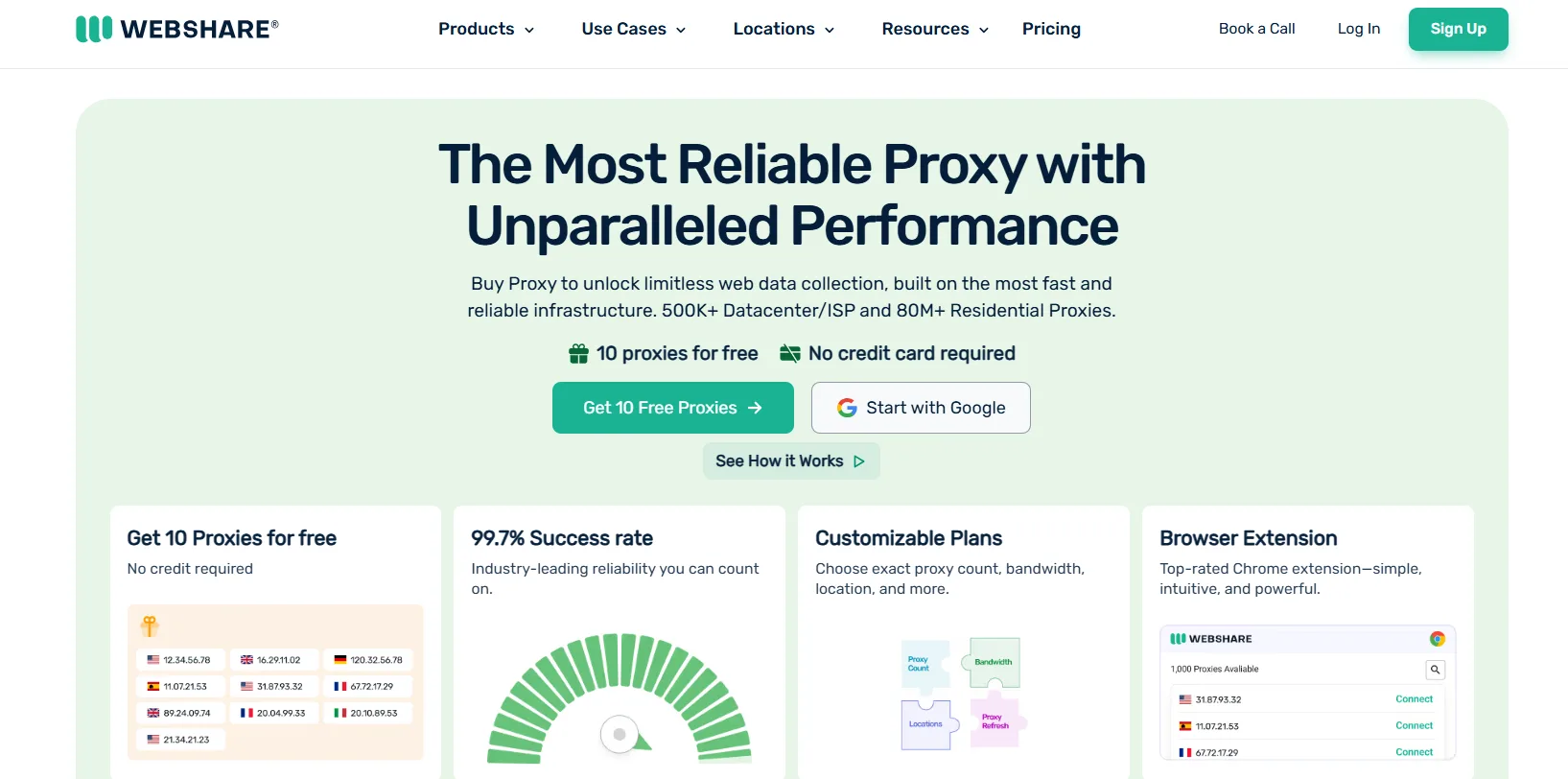
Webshare is the starting point for individual Amazon sellers, Shopify merchants, and dropshippers who need competitor intelligence without a large budget. The free plan lets you run basic competitor checks immediately. For most small seller use cases — checking competitor prices on a few dozen ASINs, monitoring product availability, or verifying your own listings from different locations — Webshare’s residential pool is more than sufficient.
What others do not tell you: Webshare’s datacenter proxies at $0.014/IP are exceptional value for Shopify store research. Shopify-powered competitor stores have significantly lower bot detection than Amazon or Walmart, meaning cheaper datacenter IPs work fine and deliver results much faster.
The honest downside: Not suitable for heavy Amazon scraping. Success rates on Amazon and Walmart at scale are lower than premium providers.
Best e-commerce use cases: Basic competitor price research, Shopify store monitoring, small-scale product availability checks, listing verification.
4. Bright Data — Best for Structured E-Commerce Datasets
IP Pool: 150M+ Pricing: From $4.20/GB PAYG; subscription from $499/month Website: brightdata.com
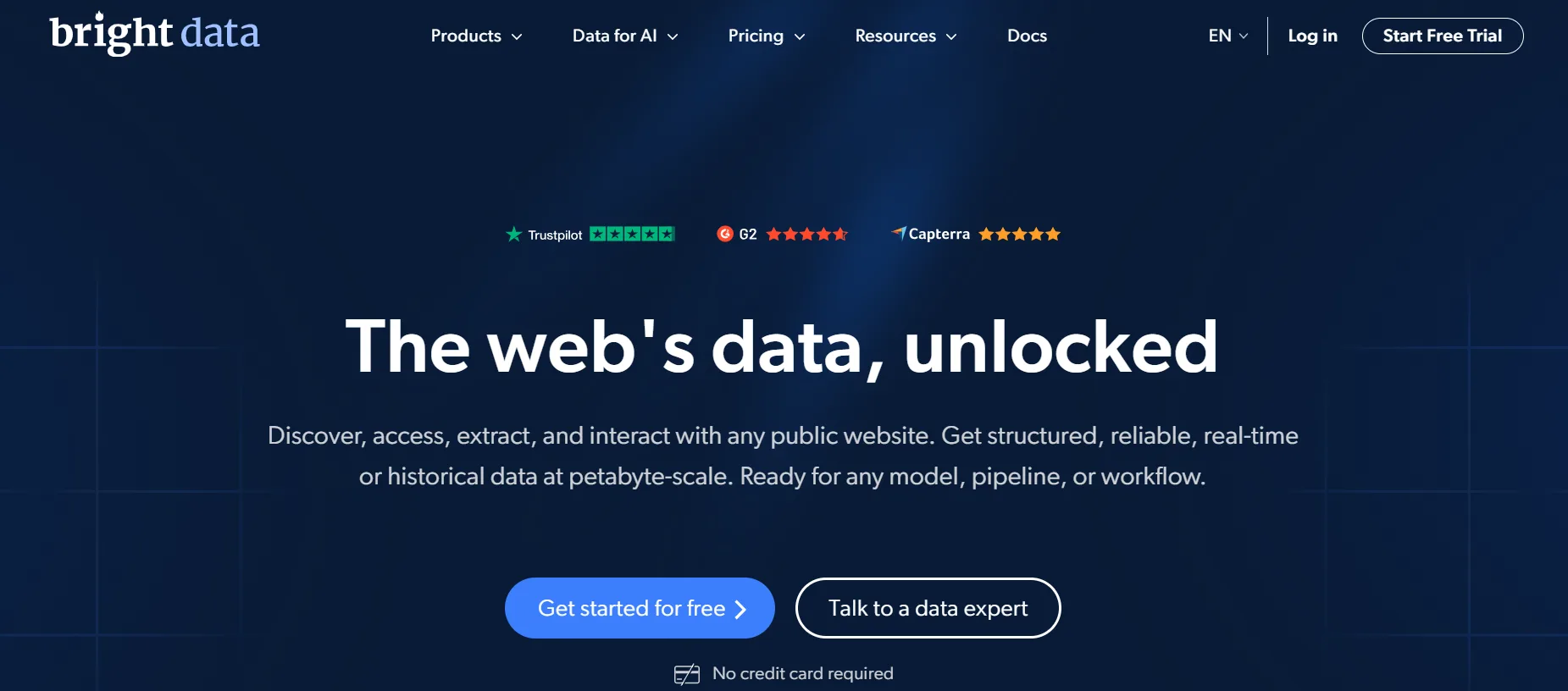
Bright Data’s core e-commerce advantage is its dataset marketplace — pre-collected, structured product data from Amazon, Walmart, eBay, and dozens of other retailers, updated regularly and delivered without you running any infrastructure. If your business need is regular access to product pricing, review counts, and availability rather than real-time scraping, buying a dataset subscription is often cheaper than building and running your own scraper.
What others do not tell you: Bright Data has pre-built no-code scrapers for 120+ specific websites including major e-commerce platforms. You click, configure, and receive data without any code. For non-technical e-commerce teams, this is enormously valuable.
The honest downside: Entry cost is high. Not practical under $300/month of budget.
Best e-commerce use cases: Retail intelligence at enterprise scale, structured product datasets, Amazon and Walmart at high frequency.
5. SOAX — Best for Location-Accurate Price Intelligence
IP Pool: 191M+ claimed Pricing: From $3.60/GB; entry from $90/month for 25GB Website: soax.com
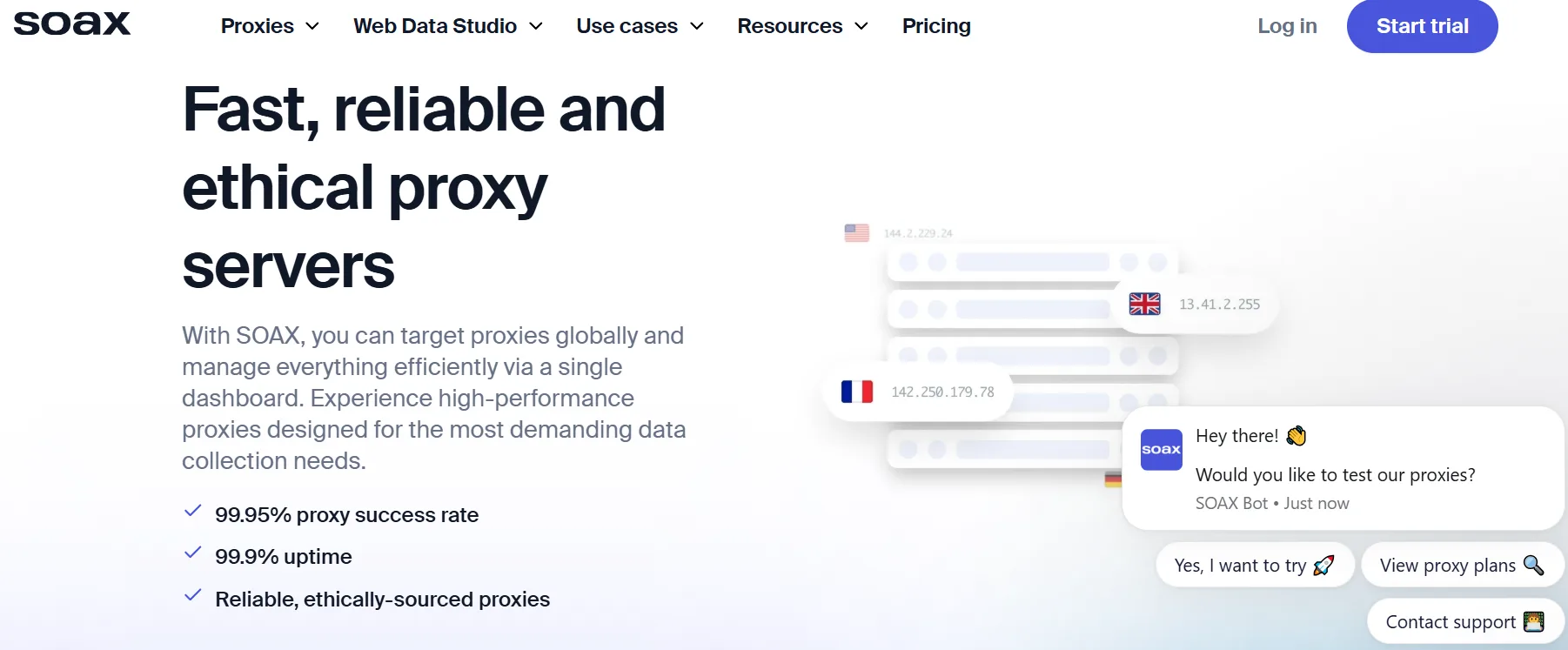
SOAX’s ISP and ASN-level targeting is its e-commerce advantage. Many retailers — particularly in consumer electronics and grocery — show different prices by ISP zone or carrier, not just by country or city. SOAX lets you target specific ISPs so your price checks reflect what actual subscribers in that ISP footprint see. This level of accuracy matters most for MAP (Minimum Advertised Price) compliance monitoring and hyperlocal pricing analysis.
Best e-commerce use cases: MAP compliance monitoring, ISP-specific pricing verification, regional product availability checking.
6. IPRoyal — Best Budget Option for E-Commerce Research
IP Pool: 32M+ Pricing: From $1.75/GB; non-expiring traffic Website: iproyal.com
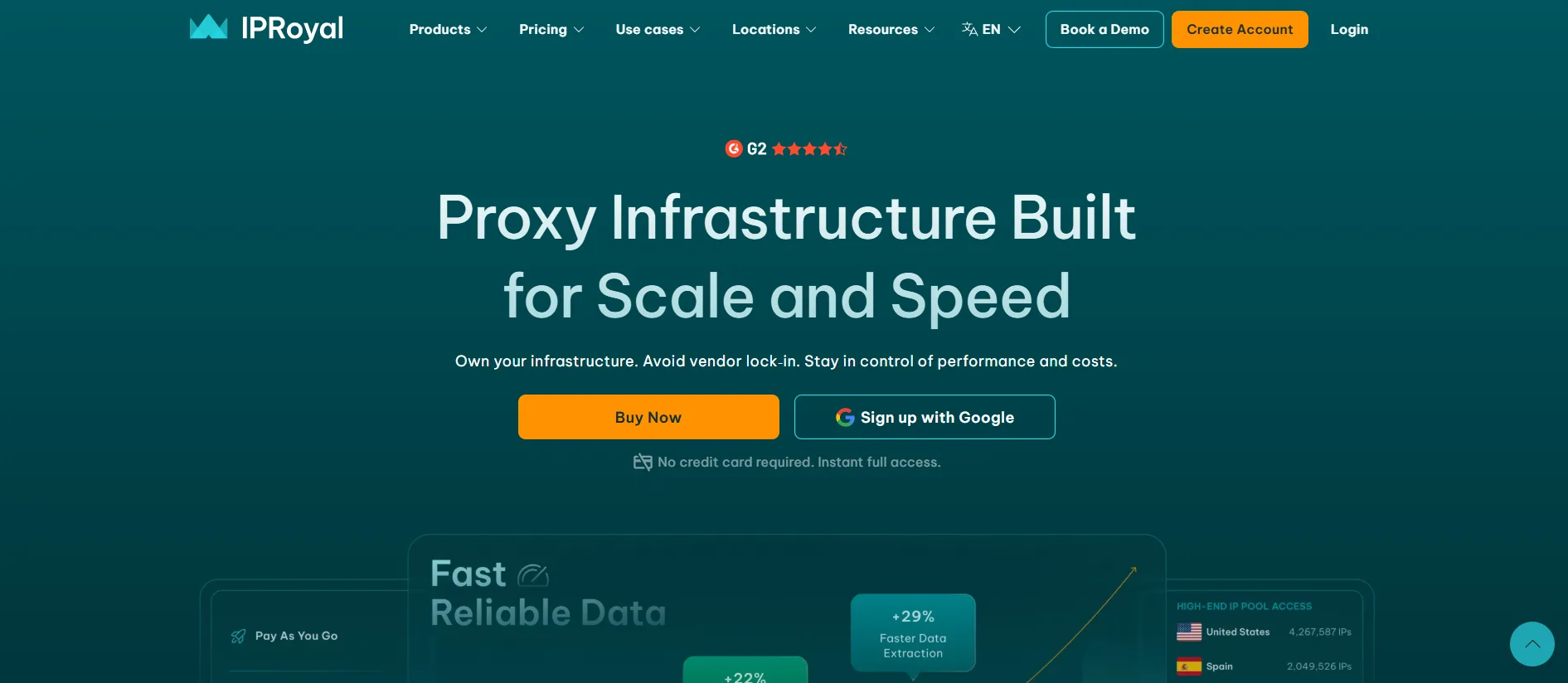
IPRoyal’s non-expiring traffic is the key feature for e-commerce sellers with seasonal needs. Amazon sellers preparing for Prime Day or Black Friday can buy bandwidth in advance and use it only when needed without losing unused credits. For moderate-volume competitor research and price checking on less-protected platforms, IPRoyal delivers reliable performance at low cost.
Best e-commerce use cases: Seasonal price research, moderate competitor monitoring, budget-conscious product intelligence.
7. ProxyEmpire — Best for Multi-Account E-Commerce Management
IP Pool: 30M+ ethically sourced; 170+ countries Pricing: From $1.97 trial; VIP integration support included Website: proxyempire.io
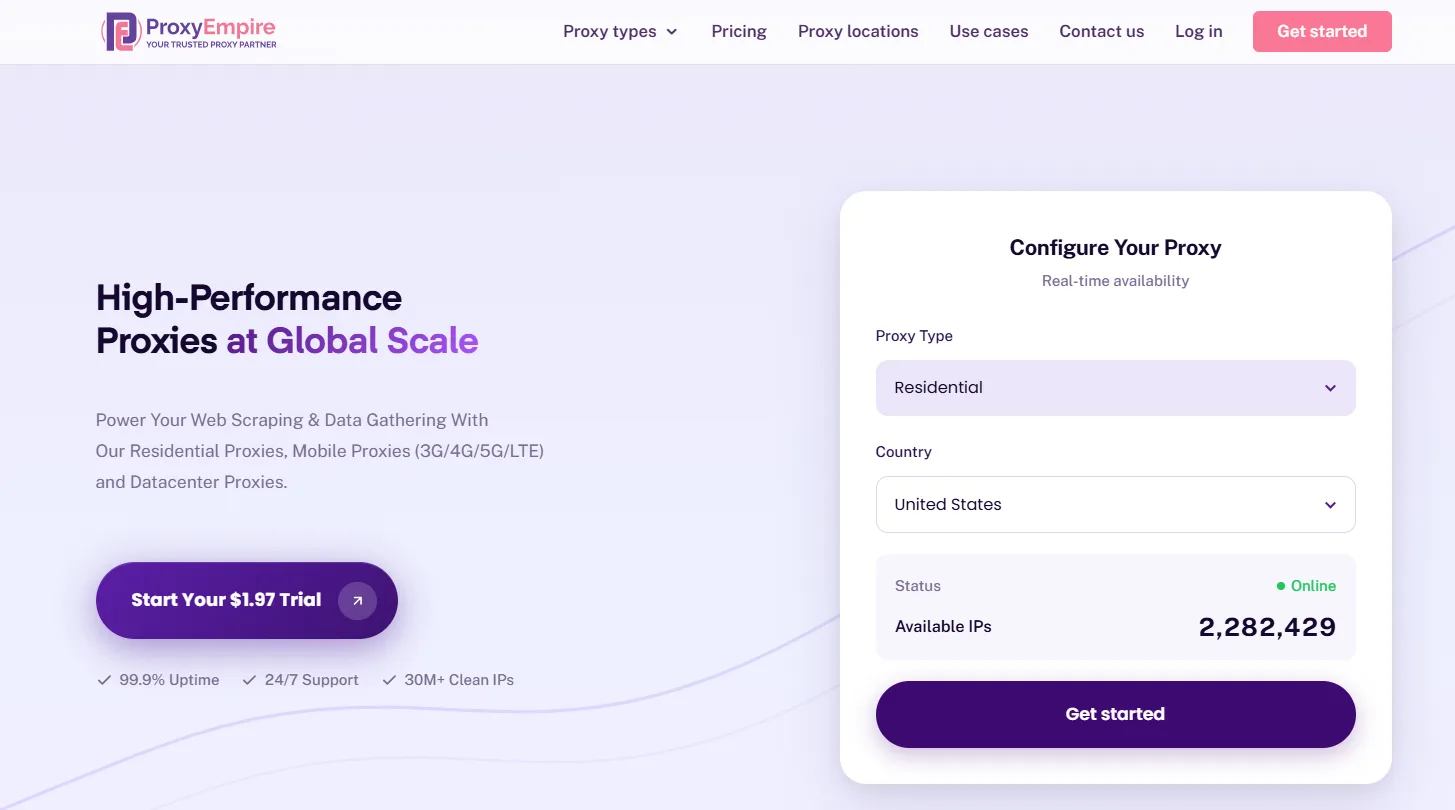
ProxyEmpire’s static residential (ISP) proxies — which hold the same IP for weeks or months — are ideal for Amazon seller account management. Switching IPs mid-session on Amazon seller accounts raises flags. Consistent ISP proxies let you manage multiple seller accounts from separate, stable identities without triggering Amazon’s linked account detection. The included VIP integration support helps teams configure this correctly from the start.
Best e-commerce use cases: Multi-seller account management, Amazon business account separation, affiliate store management at scale.
8. Rayobyte — Best for Ethical, Compliant E-Commerce Scraping
IP Pool: 40M+ residential Pricing: Custom Website: rayobyte.com
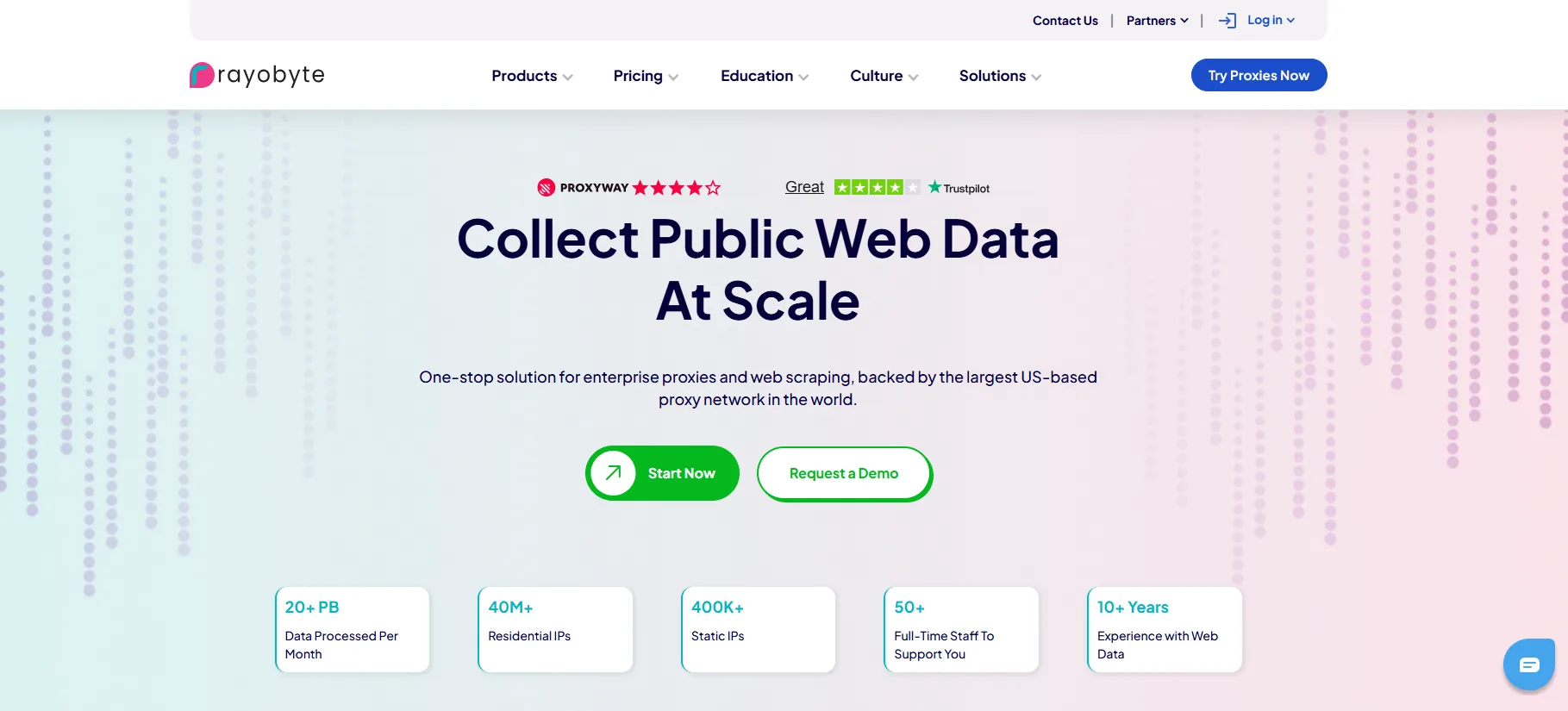
Rayobyte’s US-focused infrastructure and ethically sourced IP pool make it the right choice for enterprise retailers that need to document their data collection practices. Its strong US regional coverage is specifically useful for US marketplace monitoring where national retailers vary pricing by state or region.
Best e-commerce use cases: US marketplace price intelligence, enterprise retail data collection with compliance documentation.
9. DataImpulse — Best for High-Volume Bulk Product Data
IP Pool: 90M+ Pricing: From $1/GB; non-expiring; $5 for 5GB starter Website: dataimpulse.com
At $1/GB with non-expiring credits, DataImpulse is the cheapest way to collect large volumes of product data from lower-protection e-commerce targets. For scraping thousands of product pages from smaller retailers, comparison sites, or review aggregators, DataImpulse delivers acceptable quality at unbeatable price.
Best e-commerce use cases: Bulk catalog scraping from smaller retailers, large keyword-to-product research, price aggregation from non-Amazon sources.
Quick Comparison: All 9 Best E-Commerce Proxy Providers
Provider | IP Pool | Starting Price | Best For | Free Trial |
Oxylabs | 177M+ | From $6/GB | Amazon/Walmart at scale, E-Commerce API | Yes (limited) |
Decodo | 115M+ | From $1.50/GB | Agencies, multi-platform monitoring | 100MB free |
Webshare | 30M+ | From $1.40/GB | Solo sellers, Shopify research | 10 proxies free |
Bright Data | 150M+ | From $4.20/GB PAYG | Enterprise, structured product datasets | Yes (business) |
SOAX | 191M+ claimed | From $3.60/GB | ISP-level price accuracy, city targeting | Paid trial |
IPRoyal | 32M+ | From $1.75/GB | Budget sellers, non-expiring traffic | No |
ProxyEmpire | 170+ countries | Custom | VIP onboarding, multi-account management | $1.97 trial |
Rayobyte | 40M+ | Custom | Compliance-focused, US marketplace focus | No |
DataImpulse | 90M+ | From $1/GB | Bulk product data scraping, budget teams | 5GB for $5 |
Which E-Commerce Proxy Is Right for You?
“I sell on Amazon and need to monitor competitor prices and Buy Box status.” Go with Oxylabs E-Commerce Scraper API if you track hundreds of ASINs daily. Go with Decodo if you are a growing seller needing reliable data at a reasonable cost.
“I run a Shopify store and want to check what competitors charge.” Start with Webshare’s free plan. Move to their paid residential tier if you need more volume.
“I manage multiple Amazon seller accounts for clients.” Go with ProxyEmpire for stable ISP proxies and guided setup that keeps accounts separated.
“I need structured product data regularly without building my own scraper.” Go with Bright Data datasets. More expensive but saves engineering time and infrastructure cost.
“I need accurate regional pricing — what a buyer in a specific city or ISP zone sees.” Go with SOAX for ISP-level targeting, or Oxylabs for ZIP code precision.
“My budget is tight and I just need basic competitor research.” Go with DataImpulse at $1/GB or IPRoyal with non-expiring traffic.
FAQs: Best Proxies for E-Commerce in 2026
Do I need residential or datacenter proxies for e-commerce?
For Amazon, Walmart, and other major marketplaces, residential proxies are essential. Datacenter proxies work fine for smaller Shopify stores and less-protected retailer sites where bot detection is lighter.
Can proxies help with Amazon seller account management?
Yes, but you need static residential or ISP proxies — not rotating ones. Each account should have its own consistent IP identity. Rotating IPs across accounts is a fast way to trigger Amazon’s linked account detection.
Is it legal to scrape e-commerce product data?
Scraping publicly available product data — prices, descriptions, availability — is generally legal in most jurisdictions. What matters is respecting robots.txt and not collecting personal user data. Always consult legal counsel for your specific situation.
How much bandwidth do I need for e-commerce scraping?
A rough guide: monitoring 1,000 products on Amazon once per day uses roughly 2GB to 5GB per month. Monitoring 50,000 products with hourly updates requires 100GB to 300GB per month.
What is the difference between an E-Commerce Scraper API and raw proxies for Amazon?
Raw proxies require you to build your own scraper, parser, and rotation logic. A Scraper API handles all of that. If you have developer resources, raw proxies give you more control and lower cost per GB. If you do not, a Scraper API saves weeks of engineering work.
Quick Links
Final Thoughts: Best Proxies for E-Commerce in 2026
E-commerce proxy needs vary enormously by scale. A solo Shopify seller checking 50 competitor prices a week has completely different requirements from an enterprise retailer monitoring millions of SKUs hourly. The good news is the market now offers options at every price point — from Webshare’s free plan to Oxylabs’ enterprise SERP and e-commerce APIs.
Start with a trial on your actual target sites. Amazon is the hardest; if a provider works reliably on Amazon, it will work everywhere else. If your main targets are smaller retailers or comparison sites, you can save significantly by going with a budget provider like DataImpulse or IPRoyal.
All pricing is based on publicly available data as of October 2026. Verify current pricing directly on each provider’s website.
