
Looking for an UpCloud coupon code, promo code, free credit, or free trial?
UpCloud currently promotes a free trial with up to $500 in free credit on its get-started page, while its current cloud-server pages advertise plans starting at $3.50/month.
UpCloud Coupon Code and Free $25 Credit 2026

Get $25 Free on First Deposit
Start strong! Boost your balance instantly when you join UpCloud.
Enjoy $100 Off Trial VPS
Power up your virtual servers with a massive $100 savings.
Claim $25 Free Credit for Signing Up
No commitment—just sign up and snag your free cloud credit.
Limited-Time $200 Off VPS Packages
Go big and save big with this one-time $200 deal!
New Users: Grab a Free $50 Credit
Testing UpCloud? Here’s $50 to explore their top-tier hosting.
Save Up To 50% on Cloud Hosting
Get lightning-fast servers at half the cost.
$25 in Bonus Credits with Your First Order
Sweeten your first purchase with a free $25 bonus.
3 Days of Free Hosting Credit ($25 Value)
Try UpCloud services risk-free—on the house.
UpCloud VPS Now 30% Off
Try UpCloud services risk-free—on the house.
Get Started with Free Cloud Storage Credit
Your first deployment? We’ve got the cloud bill covered.
Early-Bird Deal: Save $100 on First VPS Setup
Launch fast, pay less. This one’s for the proactive pros.
Stack UpCloud Credits for Future Use – Save More Later
Use now or later—bonus credits that keep on giving!
UpCloud is a cloud infrastructure provider for developers, startups, businesses, and technical teams that need scalable cloud servers, storage, networking, databases, and other infrastructure services.
This guide covers the latest UpCloud coupon offers, free trial, free credits, pricing, features, redemption steps, pros and cons, and FAQs so you can decide whether UpCloud is right for your workload.
How to Redeem Discount UpCloud Coupons?
Let me walk you through this. It takes about 3 minutes.
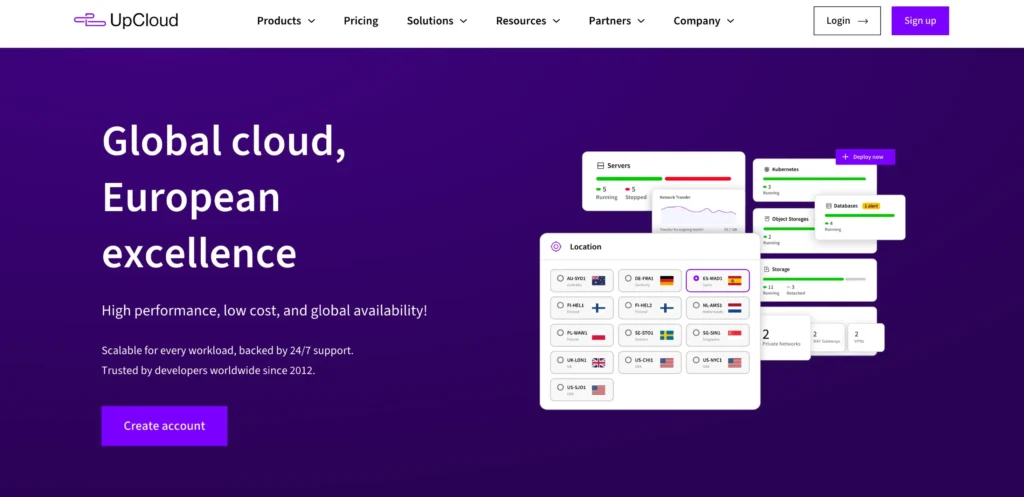
Step 1: Go to UpCloud’s Website
Click the blue button above. It takes you to UpCloud’s signup page. You’ll see a form asking for your email and password.
Step 2: Fill in Your Details
Enter your email address, create a strong password, and add your company name or just your name if it’s for personal use.
Pro tip: Use a password manager. You’ll thank me later.
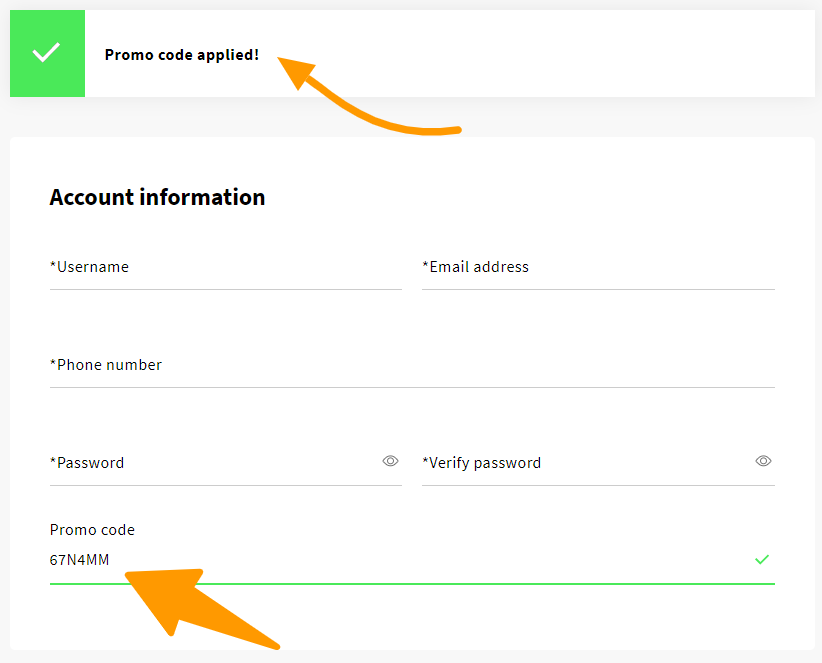
Step 3: Enter the Promo Code
Look for a box that says “Promo Code” or “Coupon Code.” Type in the code exactly as shown. Codes are case-sensitive.
For the $250 credit, you don’t need a code. It applies automatically.
Step 4: Add Payment Information
Here’s something important. UpCloud asks for a credit card, but they don’t charge you during the trial. You can use a credit card, a debit card, or PayPal. They do this to prevent fraud. I understand it feels weird, but it’s standard practice.
Step 5: Verify Your Credit
After you sign up, go to your billing page. You should see $250 in available credits, 30 days until expiration, and a current balance showing $250.00.
Take a screenshot. It’s good to have proof.
Step 6: Deploy Your First Server
Now the fun part. Go to “Servers” and click “Deploy.” Choose your server location (pick the closest to your users), server size (start small, you can always upgrade), and operating system (Ubuntu 22.04 is easiest for beginners).
Your server will be ready in 45 seconds. I’m not joking, UpCloud is fast.
UpCloud Pricing Plan and Structure
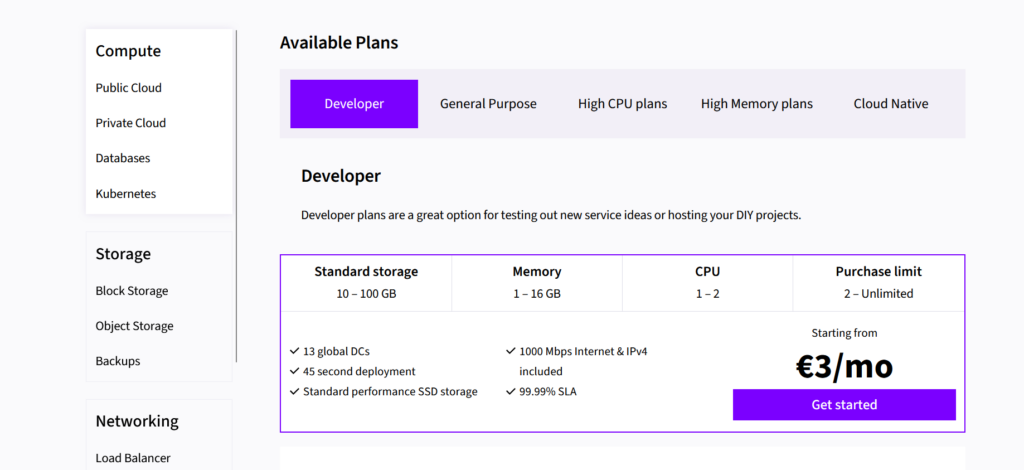
UpCloud provides five available plans. Let’s jump into each of them
Developer Plans
Memory | CPU Cores | Storage | Transfer | Estimated Monthly Price (USD) |
|---|---|---|---|---|
1 GB | 1 | 10 GB | 2 TB | $3.30 |
1 GB | 1 | 20 GB | 5 TB | $4.90 |
2 GB | 1 | 30 GB | Unlimited | $8.80 |
4 GB | 1 | 40 GB | Unlimited | $16.60 |
4 GB | 2 | 60 GB | Unlimited | $18.90 |
8 GB | 2 | 80 GB | Unlimited | $27.60 |
16 GB | 2 | 100 GB | Unlimited | $38.50 |
General Purpose Plans
Memory | CPU Cores | MaxIOPS Storage | Transfer | Estimated Monthly Price (USD) |
|---|---|---|---|---|
1 GB | 1 | 25 GB | Included | $7.35 |
2 GB | 1 | 50 GB | Included | $13.65 |
2 GB | 2 | 60 GB | Included | $18.90 |
4 GB | 2 | 80 GB | Included | $27.30 |
8 GB | 4 | 160 GB | Included | $54.60 |
16 GB | 6 | 320 GB | Included | $100.80 |
32 GB | 8 | 640 GB | Included | $201.60 |
48 GB | 12 | 960 GB | Included | $302.40 |
64 GB | 16 | 1280 GB | Included | $403.20 |
96 GB | 24 | 1920 GB | Included | $604.80 |
128 GB | 32 | 2048 GB | Included | $806.40 |
192 GB | 38 | 2048 GB | Included | $1,075.20 |
256 GB | 48 | 2048 GB | Included | $1,432.80 |
High Memory Plans
Memory | CPU Cores | MaxIOPS Storage | Transfer | Estimated Monthly Price (USD) |
|---|---|---|---|---|
64 GB | 16 | 2048 GB | Included | $806.40 |
128 GB | 32 | 4096 GB | Included | $1,296.00 |
256 GB | 64 | 8192 GB | Included | $1,680.00 |
High CPU Plans
Memory | CPU Cores | MaxIOPS Storage | Transfer | Estimated Monthly Price (USD) |
|---|---|---|---|---|
8 GB | 8 | 80 GB | Included | $54.60 |
16 GB | 16 | 160 GB | Included | $100.80 |
32 GB | 32 | 320 GB | Included | $201.60 |
64 GB | 64 | 640 GB | Included | $403.20 |
Cloud Native Plans
Memory | CPU Cores | MaxIOPS Storage | Transfer | Estimated Monthly Price (USD) |
|---|---|---|---|---|
4 GB | 1 | 10 GB | Included | $12.60 |
4 GB | 2 | 20 GB | Included | $15.75 |
8 GB | 1 | 30 GB | Included | $20.90 |
8 GB | 2 | 40 GB | Included | $24.90 |
8 GB | 4 | 60 GB | Included | $31.90 |
16 GB | 2 | 80 GB | Included | $35.70 |
16 GB | 4 | 100 GB | Included | $42.00 |
16 GB | 6 | 120 GB | Included | $49.00 |
16 GB | 8 | 140 GB | Included | $55.00 |
24 GB | 4 | 160 GB | Included | $60.90 |
24 GB | 6 | 180 GB | Included | $65.00 |
24 GB | 8 | 200 GB | Included | $70.00 |
24 GB | 12 | 240 GB | Included | $75.00 |
32 GB | 4 | 250 GB | Included | $80.00 |
32 GB | 8 | 300 GB | Included | $98.00 |
32 GB | 12 | 350 GB | Included | $105.00 |
32 GB | 16 | 400 GB | Included | $110.00 |
48 GB | 4 | 450 GB | Included | $120.00 |
48 GB | 8 | 500 GB | Included | $135.00 |
48 GB | 16 | 600 GB | Included | $150.00 |
64 GB | 8 | 650 GB | Included | $160.00 |
64 GB | 16 | 700 GB | Included | $175.00 |
64 GB | 20 | 750 GB | Included | $190.00 |
64 GB | 32 | 800 GB | Included | $200.00 |
128 GB | 8 | 850 GB | Included | $210.00 |
128 GB | 16 | 900 GB | Included | $225.00 |
128 GB | 32 | 950 GB | Included | $240.00 |
192 GB | 16 | 1000 GB | Included | $250.00 |
192 GB | 32 | 1100 GB | Included | $265.00 |
192 GB | 64 | 1200 GB | Included | $280.00 |
256 GB | 24 | 1300 GB | Included | $290.00 |
256 GB | 32 | 1400 GB | Included | $305.00 |
256 GB | 64 | 1500 GB | Included | $320.00 |
384 GB | 32 | 1600 GB | Included | $330.00 |
384 GB | 48 | 1700 GB | Included | $345.00 |
384 GB | 64 | 1800 GB | Included | $360.00 |
512 GB | 48 | 1900 GB | Included | $375.00 |
512 GB | 64 | 2000 GB | Included | $390.00 |
512 GB | 80 | 2100 GB | Included | $405.00 |
What is UpCloud?
UpCloud is a widely used cloud hosting provider for companies worldwide!
This company is known for the features it provides, such as block storage, a software-defined network, and server clouds.
UpCloud is a European cloud infrastructure provider headquartered in Helsinki, Finland. Established in 2012, it specializes in high-performance Infrastructure-as-a-Service (IaaS) solutions tailored for developers, small to medium-sized businesses (SMBs), and hosting providers.
UpCloud offers a range of cloud services designed to deliver speed, scalability, and reliability.
UpCloud helps you reduce the time you would otherwise spend managing cloud infrastructure. This means that the amount of time you can spend on the coding part of your online business can be increased, and boy, are we so unlucky with the limited hours in a single day.
However, no worries, as you can save time with this software and invest in other things we like!
Customer support is also quite impressive.
Here’s a fun fact: about 89% of the customers were satisfied with this brand! Well, that is just another thing you can add to your “Why say yes to UpCloud?” list.
Key Features of UpCloud
Let me explain the features that make a real difference.
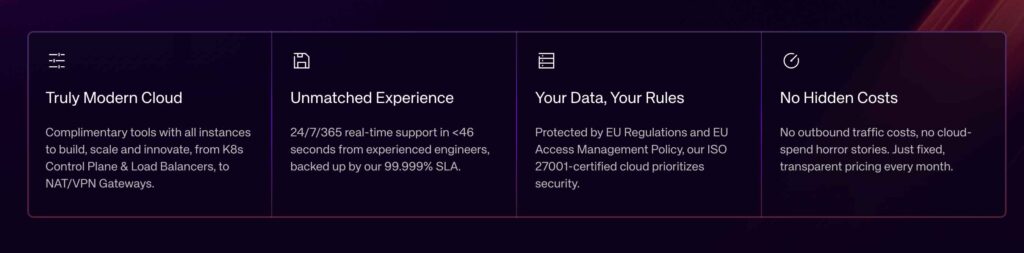
1. High-Performance Cloud Servers
Uses powerful AMD EPYC processors designed for demanding workloads.
Offers full control over Linux or Windows servers with flexible resources.
Backed by a 99.999% uptime SLA for reliability.
2. MaxIOPS Storage Technology
Proprietary high-performance storage system built by UpCloud.
Faster read/write performance compared to standard SSD storage.
Helps websites and apps load faster with low latency.
3. Easy Scalability & Hot Resize
Increase or decrease CPU, RAM, or storage anytime.
Scale resources without downtime for better flexibility.
4. Global Data Centers
Multiple locations like New York, London, Singapore, Sydney, and more.
Reduces latency and improves performance worldwide.
5. Developer-Friendly Tools
Control panel, API, SDKs, CLI, and Terraform support.
Quick deployment — servers can launch in about 45 seconds.
6. Security & Reliability
Encryption-at-rest and anti-affinity options.
Redundant infrastructure to avoid single points of failure.
Firewall, private networking, and backups included.
7. Flexible Storage Options
MaxIOPS, Standard, and Archive block storage types.
Scalable volumes up to several TB with snapshot backups.
8. Transparent Pricing & Zero Transfer Fees
Predictable pricing with zero outgoing data transfer costs.
Customizable cloud servers help manage budget efficiently.
9. Advanced Cloud Features
Anti-affinity deployment
Custom templates & cloning
Managed databases, Kubernetes, load balancers, and private networks.
Upcloud Support
You will be awestruck by the support UpCloud provides. They provide detailed video tutorials and API documentation to help you better understand.
You can earn account credits. You can drop in a suggestion or opinion in the Community section of their page. You can communicate via email or live chat. They have also provided phone numbers on their website.
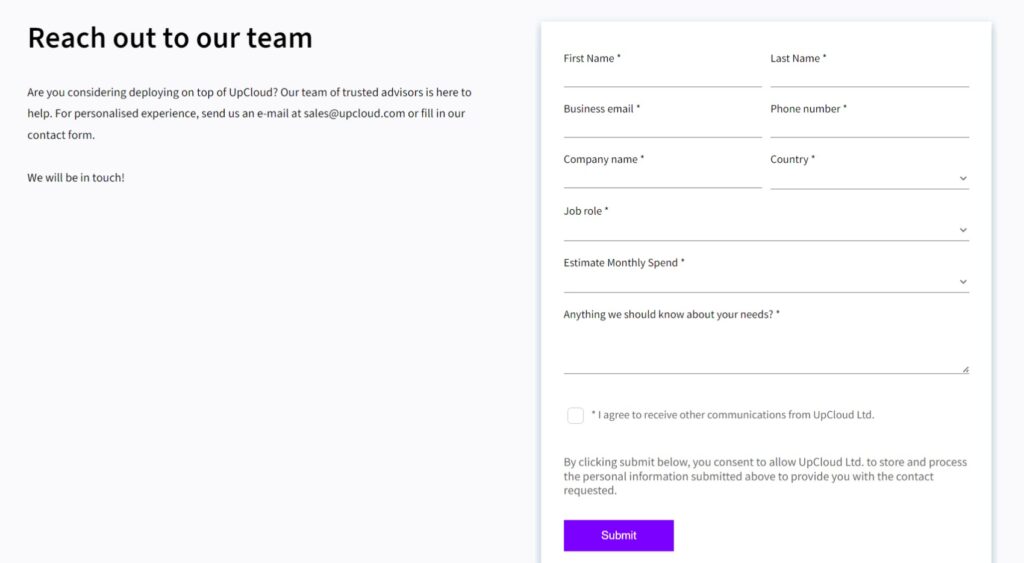
The 24/7 available team will resolve your doubts in around 2 minutes. All you have to do is go to their ‘Contact Us’ page. There, you will find all the required email IDs and county mobile numbers.
You can check if your queries have already been answered in the FAQ column. Trust me! You would not want to miss their excellent community feature.
UpCloud vs Competitors
Let me compare UpCloud to the big names. I’ve used all of these.
UpCloud vs DigitalOcean
Feature | UpCloud | DigitalOcean |
|---|---|---|
Starting price | €3/month | $4/month |
Free trial credit | $250 | $200 |
Storage IOPS | 100,000 | 60,000 |
Egress fees | $0 | Charged |
Beginner-friendly | 6/10 | 9/10 |
My verdict: DigitalOcean is easier to use. UpCloud is faster and cheaper for high-traffic sites.
Choose DigitalOcean if you’re new to VPS hosting. Choose UpCloud if you know what you’re doing and want maximum performance.
UpCloud vs AWS
Feature | UpCloud | AWS |
|---|---|---|
Starting price | €3/month | ~$3.50/month |
Pricing complexity | Simple | Very complex |
Egress fees | $0 | $0.09/GB |
Services available | 20+ | 200+ |
My verdict: AWS has more services. UpCloud is way simpler and often cheaper.
Real cost example: I ran a web app serving 5TB of data per month. AWS bill was $847/month (mostly egress fees). The UpCloud bill was €340/month with zero egress. I saved $507 per month by switching.
UpCloud Free Trial: What Do You Get?
The current UpCloud promotional signup page advertises a 30-day free trial with $500 in credit.
However, UpCloud’s documentation says its standard free trial can have different terms and that promotional campaigns may provide longer trial periods. The documentation currently describes a standard 7-day trial, while other current UpCloud promotional pages advertise longer trials.
So, the safest approach is to check the exact trial duration and credit displayed when you sign up.
What is required?
New users need to verify their identity using billing information and a payment card. UpCloud says the card isn’t charged before or during the standard trial, although a temporary authorization may be made to verify the card.
Is UpCloud Good for WordPress?
Yes, but UpCloud is infrastructure hosting rather than traditional managed WordPress hosting.
You can deploy a WordPress website on an UpCloud Cloud Server, but you’ll generally have more responsibility for server configuration, WordPress installation, security, updates, and ongoing administration than you would with a managed WordPress provider.
UpCloud is therefore better suited to:
Developers
Technical WordPress users
Agencies
Businesses with server-management experience
Users who need more control over their infrastructure
If you want a simple WordPress setup where the hosting company handles most technical maintenance, a managed WordPress provider may be easier.
Pros and Cons of UpCloud
Pros
- Cloud Servers start at $3.50/month
- Free trial available for new users
- Current promotional signup offer includes up to $500 credit
- Zero-cost egress on current Cloud Server plans
- Full root access
- Linux and Windows support
Cons
- Better suited to technical users than beginners
- Server management requires technical knowledge
Quick Links:
FAQs: UpCloud Coupon Code and Promos
UpCloud currently promotes free-trial and credit offers rather than relying solely on traditional coupon codes. The current promotional signup page advertises $500 in free credit.
The current UpCloud get-started page advertises $500 in free credit with a 30-day trial. Other UpCloud pages can display different promotional amounts or trial periods, so check the offer shown during signup.
UpCloud offers a free trial for new users. Payment information is required for verification, but UpCloud says the card isn't charged before or during the standard trial. A temporary authorization may be used to verify the payment method.
The duration can depend on the promotion. UpCloud's documentation currently describes a standard 7-day trial, while current promotional pages advertise longer trial periods, including a 30-day offer. Always check the terms displayed when activating your trial.
The current Starter Cloud Server range begins at $3.50/month globally for 1GB RAM, 1 CPU core, and 10GB standard storage.
Current Cloud Server plans include zero-cost egress, subject to UpCloud's Fair Transfer Policy.
Yes. UpCloud supports both Linux and Windows Cloud Servers.
Yes. UpCloud offers managed database services alongside its Cloud Server infrastructure.
UpCloud is primarily designed for users who are comfortable managing cloud infrastructure. Beginners can use it, but a managed hosting provider may be easier if you don't want to handle server administration.
Yes. WordPress can be deployed on UpCloud Cloud Servers, but UpCloud is not primarily a managed WordPress platform. You'll have more responsibility for configuring and maintaining the server.
Yes. UpCloud offers Managed Kubernetes and Cloud Native infrastructure designed for containerized workloads.
UpCloud states that Cloud Servers can be deployed in approximately 45 seconds.
Conclusion: UpCloud Promo Code 2026
UpCloud is worth considering if you need flexible, high-performance cloud infrastructure with full control over your servers.
Its current Cloud Server pricing starts at $3.50/month, while Premium plans start at $6/month and Cloud Native plans at $14/month. The platform also offers features such as MaxIOPS storage, zero-cost egress, private networking, APIs, Terraform support, managed databases, and Kubernetes.
For new users, the current promotional signup offer can make it easier to test the platform before committing to a paid workload. UpCloud’s current promotional page advertises $500 in free credit, although trial terms can vary by offer.
Quick recommendation:
Testing or development: Start with a Starter plan.
Production applications: Consider Premium.
Kubernetes or scalable workloads: Consider Cloud Native.
WordPress beginners: Consider managed WordPress hosting instead.
Developers and DevOps teams: UpCloud is a strong option.
Before signing up, check the current free-credit amount, trial duration, billing terms, and resources included in your selected plan.
