
A Development That Should Concern Anyone With India-Facing Products
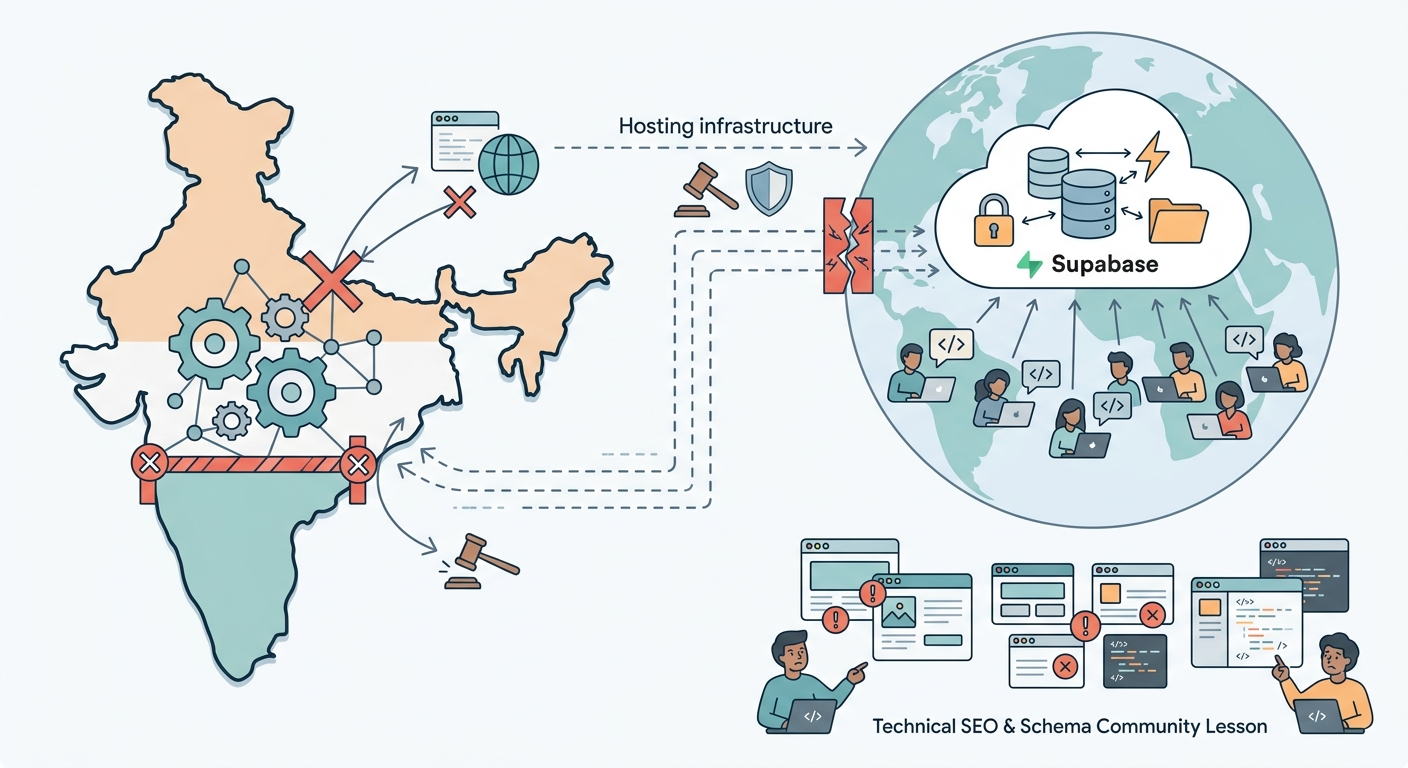
India has disrupted access to the popular developer platform Supabase with a blocking order. Supabase is an open-source Firebase alternative used by hundreds of thousands of developers globally as their backend infrastructure. It provides database, authentication, storage, and real-time capabilities.
The blocking order from India’s telecom authority is not about Supabase’s content — it appears to be a collateral effect of broader blocking actions affecting the platform’s hosting infrastructure.
For the technical SEO and schema community, this story has a direct practical lesson. Any developer infrastructure that is hosted outside India and not compliant with India’s data localisation requirements can be blocked without warning, breaking applications and websites that depend on it.
This is not theoretical — Supabase is a widely-used platform and developers in India are currently finding their applications broken.
The Data Localisation and Schema Compliance Connection
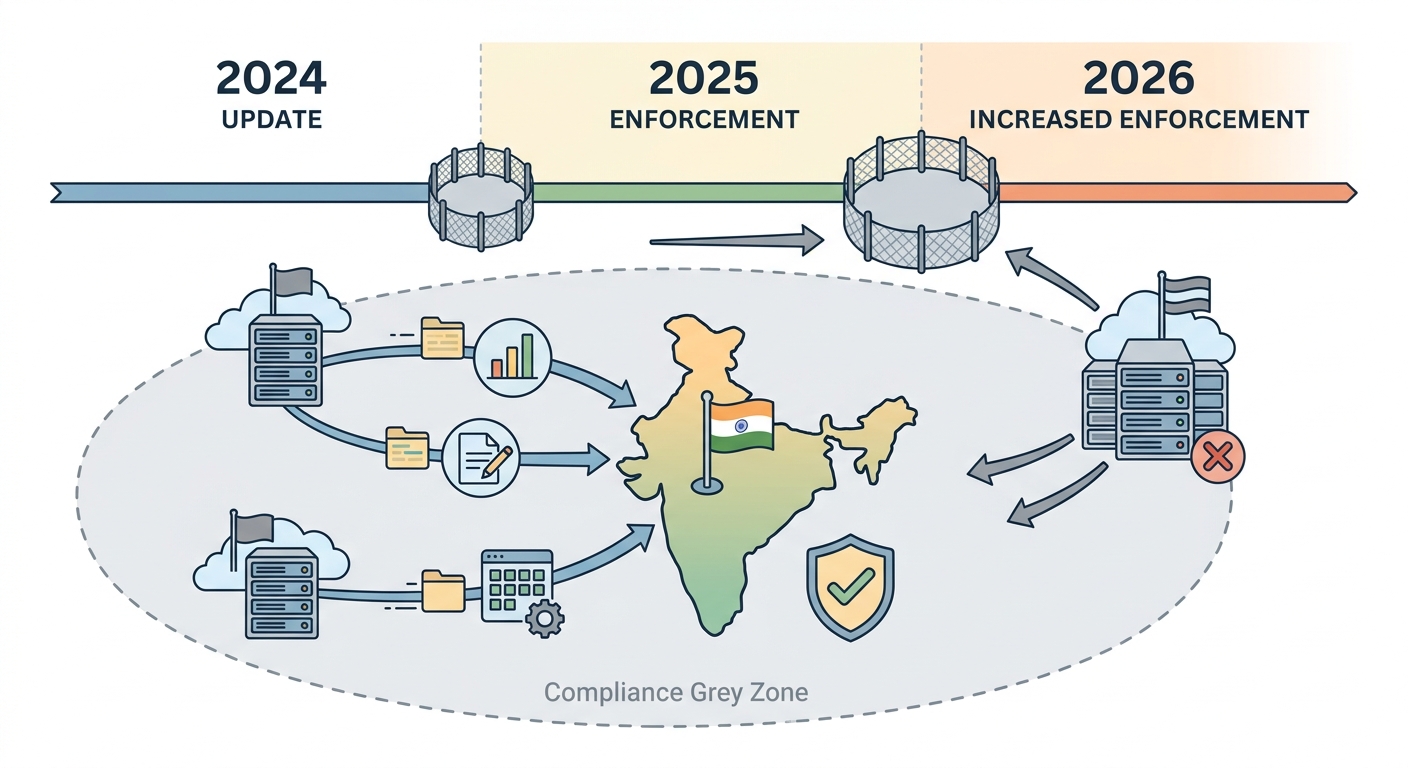
India’s data protection laws — updated in 2024 and increasingly enforced in 2025 and 2026— require that certain categories of Indian user data be stored on servers within India.
Websites and applications serving Indian users that store user data on foreign infrastructure are operating in a compliance grey zone that is narrowing.
For publishers and organisations with significant Indian traffic, this has structured data implications. The server location of your website’s infrastructure, your analytics data storage, and your form submission data are all relevant to India’s data residency requirements.
Ensuring your technical infrastructure is appropriately compliant is not just a legal question — it is a business continuity question, as the Supabase blocking demonstrates.
The Broader Infrastructure Sovereignty Trend
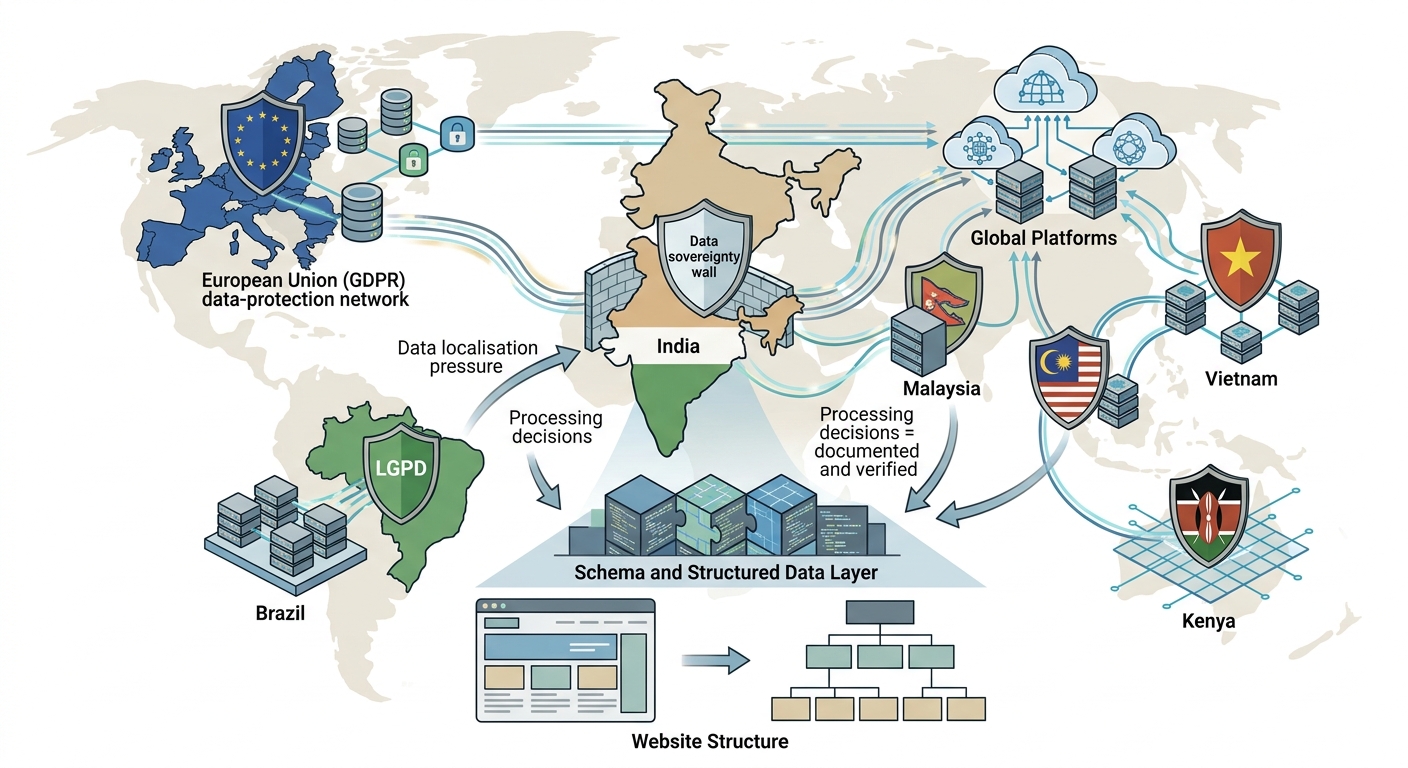
India is not alone in moving toward infrastructure sovereignty requirements. The EU’s GDPR, Brazil’s LGPD, and similar data protection frameworks in Malaysia, Vietnam, and Kenya all create data localisation pressures for global platforms.
The technical infrastructure decisions made by websites serving global audiences need to account for these requirements — and the schema and structured data layer is one place where data processing decisions are documented and verifiable.
💬 Reddit — r/webdev and r/india on Supabase blocking and developer infrastructure: 🔗https://www.reddit.com/r/india/search/?q=Supabase+blocked+India+developer+infrastructure+2026
🐦 X/Twitter — developers reacting to India Supabase blocking order: 🔗https://x.com/search?q=India+Supabase+blocked+developer+2026&f=live
💬 Quora — why did India block Supabase and what should developers do: 🔗https://www.quora.com/search?q=India+block+Supabase+developer+platform+2026
Quick Links:
